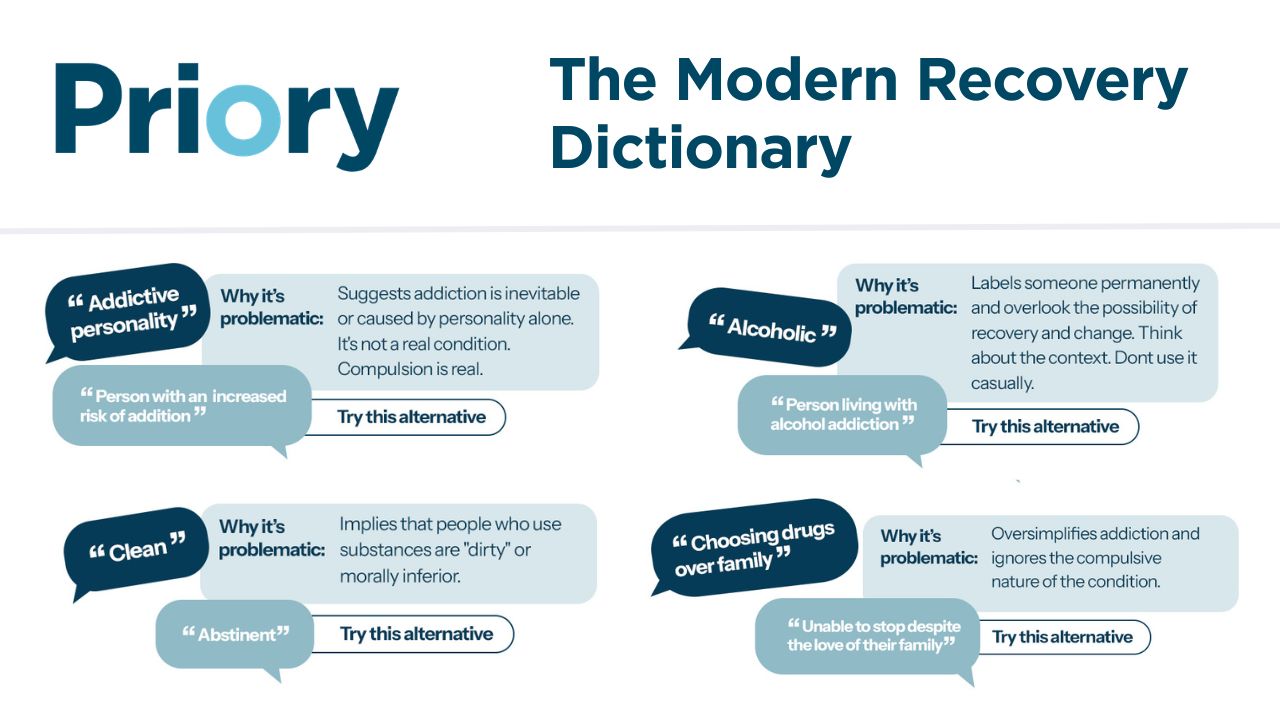
The Modern Recovery Dictionary
What the science says about self-talk and addiction recovery
The conversations we have with ourselves are constant. They shape how we respond to setbacks, approach challenges and make sense of difficult experiences. Sometimes that inner voice is encouraging, reminding us that we can cope or that tomorrow is another opportunity to try again. At other times, it can be highly critical, reinforcing self-doubt, shame or the belief that change is out of reach.
Psychologists refer to this internal dialogue as self-talk. While we often think of words as simply reflecting how we feel, growing evidence suggests they can also influence how we interpret experiences, regulate emotions and approach change. The average person experiences more than 6,000 thoughts every day, meaning the language we repeatedly use with ourselves has countless opportunities to shape our mindset.
For people recovering from addiction, where identity, hope and self-belief often play an important role alongside treatment, those internal conversations can become even more significant. The language used by healthcare professionals, family members and friends also has the power to influence how recovery is experienced, affecting everything from self-perception to the stigma people encounter when seeking support.
That growing body of evidence is the inspiration behind Priory's Modern Recovery Dictionary, which encourages more compassionate, person-centred conversations around addiction and recovery.
Self-talk is often associated with motivation or positive thinking, but research suggests it plays a much broader role in the way we think, feel and behave. Rather than simply reflecting our thoughts, the language we use can influence how we interpret situations, regulate emotions and respond to challenges.
One area that has attracted particular interest is psychological distancing. Researchers have found that using your own name, rather than "I", when talking yourself through a difficult situation can improve performance under pressure. Similarly, speaking to yourself in the third person has been shown to calm the brain's emotional response within around a second, without requiring additional mental effort. Creating this small amount of distance can make it easier to think more objectively instead of becoming overwhelmed by stress or self-criticism.
Research has also shown that changing just a few words can alter the way we experience difficult emotions. In one study, participants preparing to complete challenging tasks were encouraged to replace the phrase "I am anxious" with "I am excited." Although the physical sensations associated with anxiety and excitement are similar, reframing those feelings as excitement led to significantly better performance, increasing singing accuracy from 53% to 80% while also improving scores in maths by 8%. Rather than attempting to suppress nerves, the change helped participants interpret them as a source of energy and readiness.
The language people choose can also influence long-term behaviour. In a study exploring healthy eating habits, participants who said "I don't" instead of "I can't" were far more likely to stick to their goals over the following ten days. The difference may appear subtle, but framing a behaviour as part of someone's identity proved considerably more effective than language suggesting restriction or deprivation. Researchers have observed similar patterns in addiction treatment, where the strength of a person's own commitment language during therapy has been found to predict drug abstinence a year later, highlighting how the words people use can reflect and reinforce motivation for change.
Self-talk is not always encouraging, however. Many people are far more compassionate towards others than they are towards themselves, responding to mistakes with harsh criticism or blame. Research has consistently found that self-compassionate self-talk is associated with lower levels of depression, anxiety and stress, suggesting that treating ourselves with greater understanding may support better psychological wellbeing during difficult periods.
What links these studies is the idea that language does more than describe our experiences; it helps shape them. The words we use can influence how we interpret challenges, regulate our emotions and sustain behaviour change. For people recovering from addiction, where identity, hope and resilience are all part of the recovery journey, that insight becomes especially relevant.
Recovery is about much more than stopping alcohol or drug use. It can involve rebuilding confidence, repairing relationships, developing new coping strategies and creating a different understanding of who you are beyond addiction.
Richard Sparkes, Service Manager at Priory Beacon House, understands this from both a professional and personal perspective. Before joining Priory, Richard lived with alcohol addiction himself, giving him first-hand insight into the role language can play throughout recovery.
For Richard, one of the biggest challenges is ensuring that addiction does not become the only way someone is seen, either by others or by themselves.
"I don't like 'Hi, I'm Richard, I am an addict'. I go with 'Hi, I'm Richard and I'm an addict'. I'm also a husband, a dad, a son, a brother and a friend’. We should never label anyone. If they want to call themselves an addict that's up to them."
His perspective reflects a growing shift towards person-first language, which recognises that addiction is something a person experiences rather than who they are.
Research suggests this distinction matters. In one study, clinicians who were shown the term "substance abuser" were significantly more likely to view the same individual as deserving punishment rather than treatment. Another found that public support for treatment increased from 41% to 69% simply by changing the description from "substance abuser" to "person with a substance use disorder".
These studies show that language does more than describe addiction. It shapes attitudes, expectations and, ultimately, how people are treated.
Richard also believes recovery itself should be understood differently.
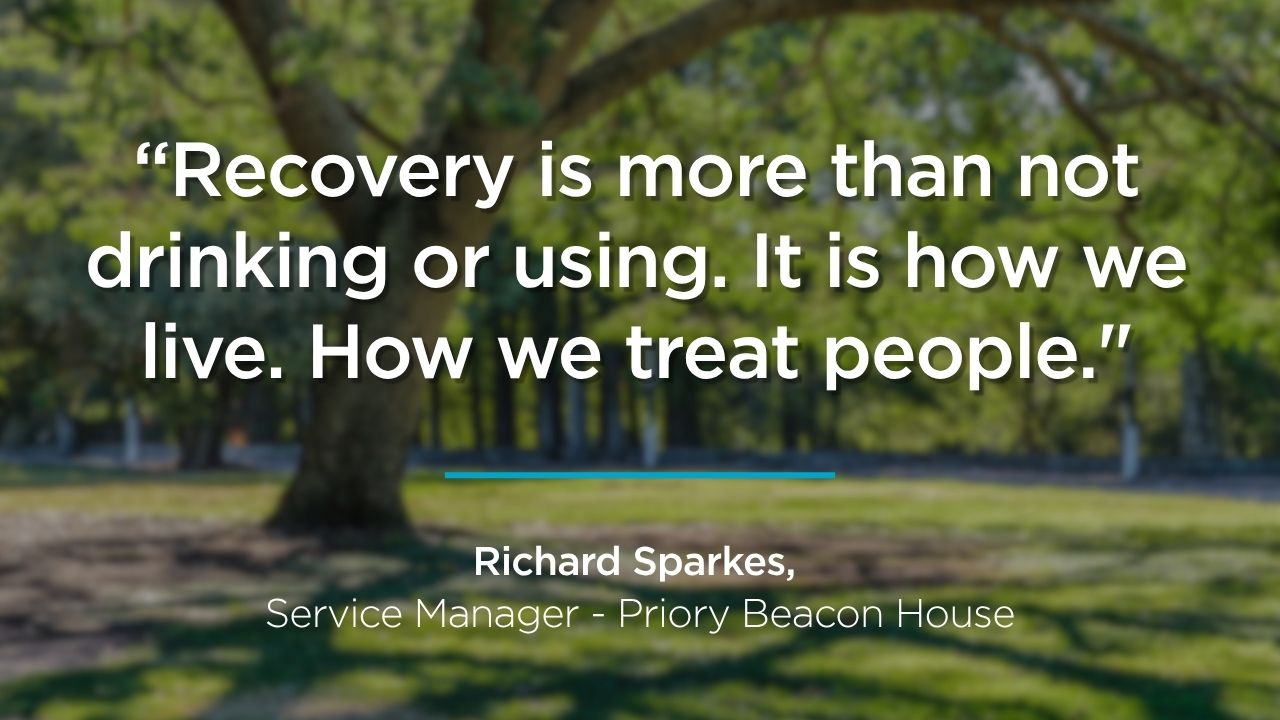
"I practise recovery. I don't always get it right. That’s not me saying I relapse but recovery is more than not drinking or using. It is how we live. How we treat people."
Describing recovery as something that is practised rather than perfected is a powerful example of self-talk in action. It acknowledges that setbacks, challenges and difficult days are part of the process without allowing them to define a person's future.
He also encourages people not to feel that there is only one route to recovery.
"I have always tried everything three times. I collect all the tools and use the ones that fit me. You can't fix a car with just a hammer."
Like self-talk itself, recovery is rarely one-size-fits-all. Different people find strength in different approaches, but compassionate language can provide an important foundation regardless of the treatment pathway.
If the words we use with ourselves influence the way we think, the words we use about other people influence the way we think about them too.
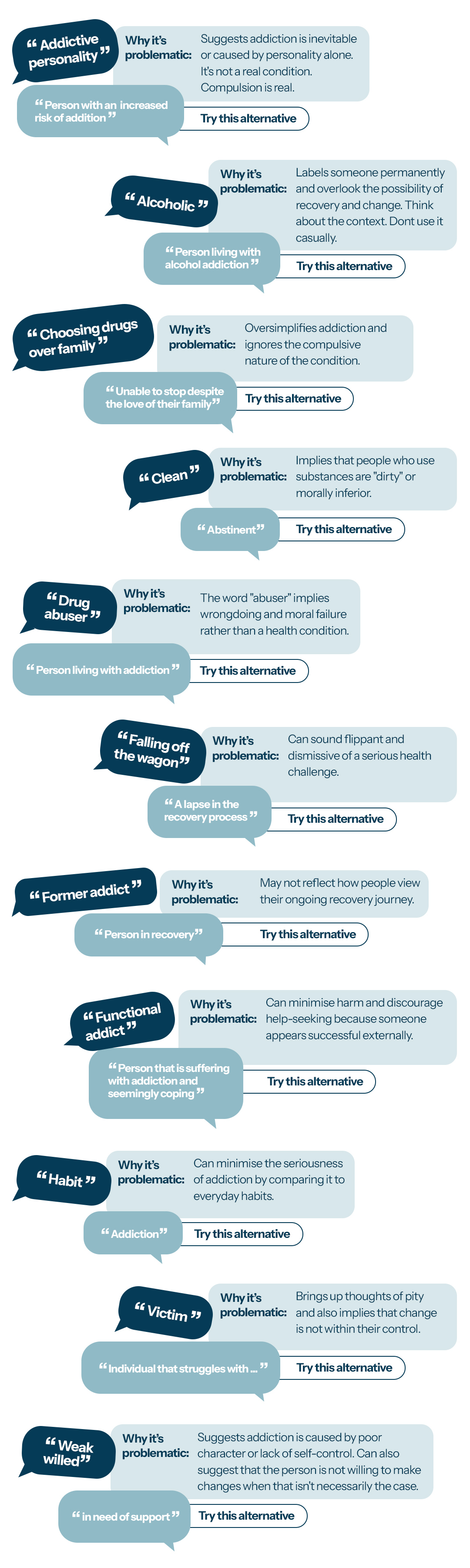
We developed The Modern Recovery Dictionary to encourage more compassionate, accurate and person-centred conversations around addiction. Rather than criticising people for the language they currently use, it offers thoughtful alternatives that reduce stigma while recognising addiction as a complex health condition.
Many of these alternatives share a common principle: they describe the condition without allowing it to define the individual. Others replace language that can minimise addiction or reinforce blame with wording that better reflects current understanding of addiction as a complex health condition influenced by biological, psychological and social factors.
The science of self-talk reminds us that language is never just language. The words we choose can influence the way we think about ourselves, how we approach challenges and how we respond to setbacks. They can also shape how society views addiction and the people affected by it.
That doesn't mean changing a few words will overcome addiction on its own. Recovery is often complex and may require professional treatment, support from family and friends, and sustained personal commitment. However, compassionate, person-centred language can help create an environment where recovery feels possible rather than defined by shame.
Richard believes that support from others is fundamental.
"It's about having the support and the combined power of people to overcome. You don’t have to do it on your own, in fact, I don’t think you can."
The Modern Recovery Dictionary is intended to support those conversations. By encouraging language that recognises the person before the condition, it aims to reduce stigma, promote understanding and remind us that recovery is not about being defined by the past. It is about recognising that change is possible, and that the words we choose, whether spoken to ourselves or to others, can help shape the journey forward.
If you, or someone you know, is struggling with addiction, Priory offers a range of support, including residential addiction service - Flourish, an accessible, community-based alternative to hospital treatment. If you’re unsure what service is right for you or a loved one, you can call our enquiries team on 0330 056 6041, who can offer any guidance you require.
Research suggests that self-talk can influence how people manage stress, respond to setbacks and regulate their emotions. Negative self-talk has been linked to higher levels of anxiety, depression and self-criticism, while self-compassionate self-talk is associated with better psychological wellbeing. Although changing the way you speak to yourself is not a substitute for professional support, developing a more balanced and compassionate inner dialogue may help build resilience and encourage healthier coping strategies.
Person-first language places the individual before their condition, using terms such as "person living with addiction" rather than labels like "addict" or "drug abuser". This approach recognises that addiction is only one aspect of someone's life and helps reduce stigma. Research has shown that the language used to describe addiction can influence public attitudes and even clinical decision-making, making respectful, person-centred language an important part of supportive conversations.
The Modern Recovery Dictionary is a guide developed by Priory to encourage more compassionate and accurate language around addiction and recovery. Rather than focusing on words people should avoid, it suggests alternative terms that recognise addiction as a health condition and place the individual before the diagnosis. The aim is to support more constructive conversations that reduce stigma while encouraging understanding and hope.
Positive self-talk is not about ignoring problems or pretending everything is fine. Instead, it involves using language that encourages constructive thinking and reinforces personal agency. Research has found that subtle changes in wording, such as saying "I don't" instead of "I can't", can strengthen commitment to behavioural goals, while reframing nervousness as excitement may improve performance under pressure. Over time, these small shifts in language can help people approach challenges with greater confidence and resilience.
The words used to describe addiction can shape how people see themselves and how others respond to them. Stigmatising language may reinforce feelings of shame or blame, while more compassionate, person-centred language encourages understanding and recognises that recovery is possible. Changing language alone will not treat addiction, but it can help create a more supportive environment for people seeking help and working towards recovery.