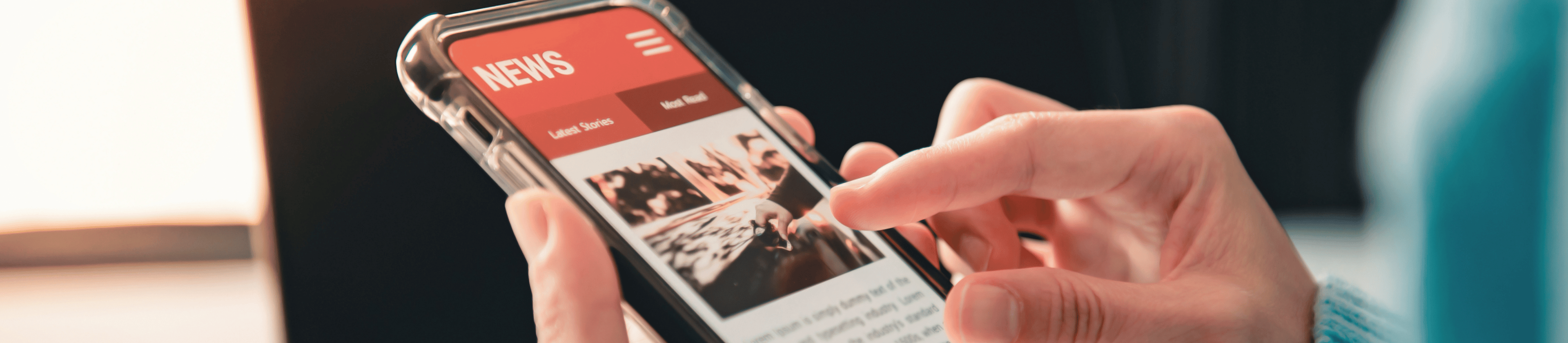
Scrolling through the news or other online content can make us feel overwhelmed, helpless, angry or guilty, and these feelings can linger even after we’ve put the phone away.
If you’ve been noticing this in yourself, it’s important to know that it’s a natural response to an overload of information. This article explores a few manageable ways to stay informed while keeping anxiety in check.
What is news anxiety?
News anxiety isn’t a formal diagnosis, but it describes a pattern of feeling anxious or overwhelmed in response to consuming a lot of negative or distressing news.
It’s a specific type of emotional overload caused by the constant stream of headlines. Put simply, it can happen when your empathy for the world outpaces your brain’s ability to process what you’re taking in.
Unlike everyday stress, the effects don’t always fade when you’ve put your phone down. The stories can linger, leaving your body feeling tense and your mind switched on, as if the threat is ongoing.
Why your brain treats headlines like a physical threat
News anxiety is the result of your brain trying to protect you from potential danger. Unfortunately, it can’t distinguish between immediate, local threats and global, distant threats.
Reading a distressing headline or article is often interpreted as a threat by the amygdala (your internal alarm system), which triggers the fight/flight response.
You might experience physical symptoms of anxiety or fear, like increased heart rate and churning stomach, because your body is reacting as though the danger is happening right now and here.
It’s an evolutionary mismatch: your brain evolved to detect immediate, visible threats in your local area and community. But in today’s world, you’re constantly exposed to threats happening across the globe, so your alarm system never actually turns off.
News anxiety is a natural response to an unnatural amount of information – experiencing it doesn’t mean there’s something wrong with you.
It’s OK to feel overwhelmed right now
There’s no right or wrong way to feel about what’s happening in the world. It affects everyone differently but if it’s making you feel anxious, you’re not alone – many people are struggling to deal with the heavy influx of information.
If you’re experiencing any of the following feelings, remember that they’re a normal response to overwhelming input and aren’t a sign of weakness:
- Guilt: feeling guilty because of thoughts like ‘Why am I OK when others aren’t?’
- Numb: emotionally shutting down to protect yourself from overwhelm (not because you don’t care)
- Anger: feeling angry at injustice, systems and lack of control
- Helpless: when there are no clear ways to help or you feel your efforts would be ’useless’ anyway
- Distracted: finding it hard to focus on everyday tasks because of how you feel about what’s happening in the world
- Anxious: mental and physical symptoms of anxiety like restlessness, rapid heartbeat, digestive issues, muscle tension, headaches and uncontrollable worry
Five small ways to reclaim your peace
Staying informed and up to date with the news is important to many people and avoiding it completely is often unrealistic.
However, there are a few micro-habits you can consider which might help to alleviate some of the overload and anxiety. For example:
1. Time boundaries
Although the headlines are hard to avoid entirely, consider setting specific times for checking the news. It can help you to restore a sense of control and gives your brain a rest from being on high alert.
2. Change how you consume news
Instead of endlessly scrolling (also known as doomscrolling), try to be more intentional about what you consume. Choose fewer, more reliable sources and avoid sensationalist headlines designed to trigger emotion (as often found on social media platforms).
3. Notice what’s happening in your body
When you notice your thoughts spiralling, take a moment to notice what’s happening in your body. For example, do you feel tension and can you locate where it is? That way, you can consciously relax your body and breathe slowly, making the exhalation longer than the inhalation. This directly calms down the nervous system.
4. Practise grounding techniques
After you’ve consumed news, you could do something grounding afterwards to help your mind stabilise. For example, you could go for a walk outside, connect with a loved one, make a cup of tea, listen to your favourite music, or do any other activity that brings you back to the here and now.
5. Focus on what you can control
Trying to find solutions to the world’s problems is overwhelming. So instead of focusing on the whole world, think about how you can take action locally. For example, you might donate, volunteer or simply stay informed. You could help out in your family/friend circles or your local neighbourhood. This can give you back a sense of agency and reduce feelings of helplessness.
Take-home message
News anxiety is a natural response to an unnatural level of exposure to global suffering.
Any emotional reactions are valid and make evolutionary sense. Our brains were never designed to deal with so much threatening input.
Nevertheless, while staying informed can be important, making small changes to how and when you consume the news can reduce the overwhelm. And remember, headlines that cause fear, shock and outrage are prioritised by platforms because they drive engagement through activating our threat response.
You’re not alone in experiencing news anxiety and learning how to care without becoming overwhelmed is something we’re all learning.