Struggling with over-control? How RO-DBT can help
- 26-week group at Priory Hospital Roehampton
- Focus on helping people gain more control
- Site rated 'Good' by CQC
In our society, self-control is usually celebrated. We’re taught that being disciplined, dutiful and controlled is the key to success. However, for some of us, self-control can become excessive. When we are too controlled, we may find it difficult to relax, struggle to show our true emotions, and feel a deep sense of emotional loneliness even when we’re around other people.
If you often find yourself meticulously planning, strictly following rules, or struggling to connect deeply with others, you may be experiencing emotional over-control. At Priory Hospital Roehampton, our specialised radically open dialectical behaviour therapy (RO-DBT) programme can help you find a more flexible and connected way of living.
RO-DBT is a modern, evidence-based treatment specifically designed for people who struggle with excessive over-control. While traditional DBT often focuses on helping people gain more control over impulsive emotions, RO-DBT does the opposite. It helps those who are already very controlled to ‘loosen up’, be more spontaneous and connect with others.
Excessive over-control is often linked to conditions such as:
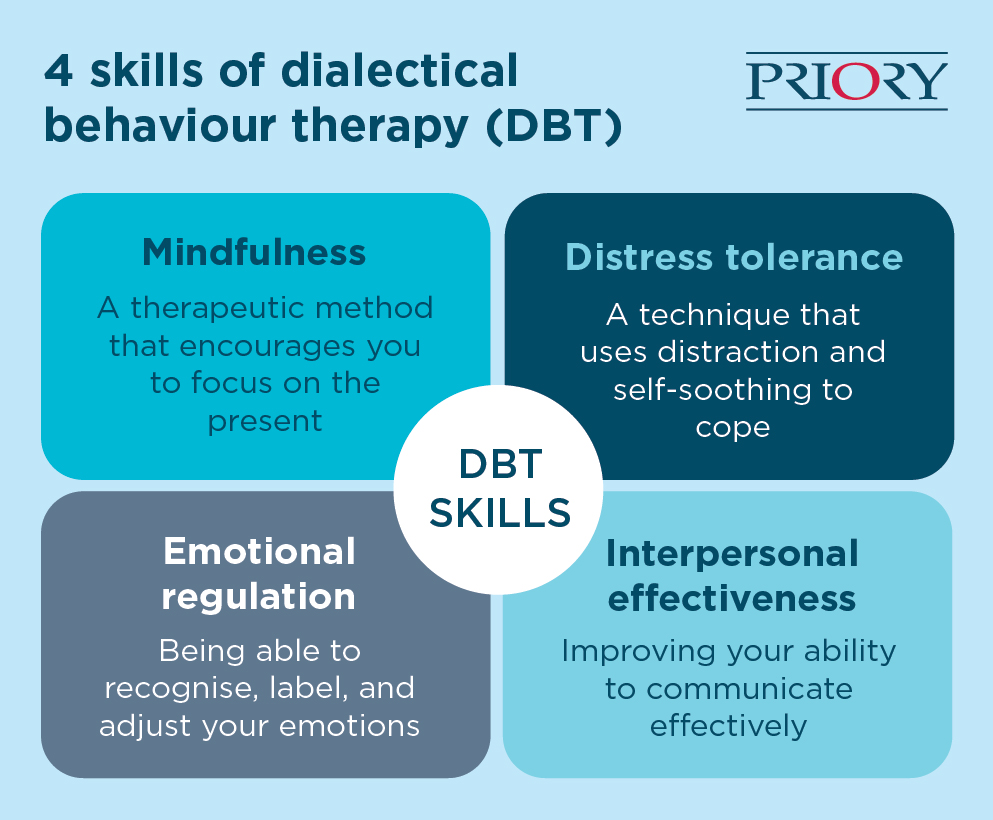
While RO-DBT shares a name with traditional DBT, they are designed to treat very different emotional styles. Understanding the differences is key to ensuring you receive the most effective support for your personality type.
Standard DBT was originally developed to help people with under-control, where emotions feel overwhelming and lead to impulsive actions. RO-DBT, however, was created for people with over-control, where emotions are kept under such a tight lock that it leads to social disconnection.
At Priory Hospital Roehampton, we also run a traditional DBT group for those that need it. Before starting a group, our team will assess your symptoms and recommend which group would be best for you.
Our RO-DBT programme focuses on three key pillars of wellbeing:
By engaging with RO-DBT, you can gain much more confidence in managing your emotions and navigating social interactions.
Our RO-DBT programme is a comprehensive 26-week journey held online via Zoom on Fridays. This makes it accessible from the comfort of your own home while still providing the power of a group setting.
Therapy is delivered by our experienced clinicians in an open group format, which means you can join at any point in the programme cycle. Each session is designed to build your toolkit of social and emotional skills. The programme focuses on:
You’ll also be provided with written materials and homework tasks to be completed in between sessions. These exercises are essential for helping you cultivate new habits in your daily life.
Our RO-DBT specialists can help you to manage the difficulties you’re experiencing, improve your quality of life, and connect with others who understand what you’re going through.
Our highly qualified therapists, all of whom have extensive experience in supporting people who struggle with over-control, facilitate the course. They provide a confidential and supportive environment where you can explore your typical responses and learn to embrace a more engaged life.
You can call us today to book your space on the RO-DBT group and learn more about our upcoming start dates.
The RO-DBT programme is available for both self-paying patients (£315 per class) and those using private medical insurance (PMI). Please check with your insurer to find out the level of treatment they will authorise.