What is dysthymia? Symptoms, causes and treatment
Dysthymia can leave you feeling trapped in a persistent low mood, but recognising the signs can be the first step towards finding the support and care you need.


Dysthymia, also known as persistent depressive disorder (PDD), is a long-term form of depression that causes ongoing low mood, low energy and reduced interest in daily life.
It can be less severe than major depression, but because it lasts for a long time, it can have a significant impact on how you feel, think and function day to day.
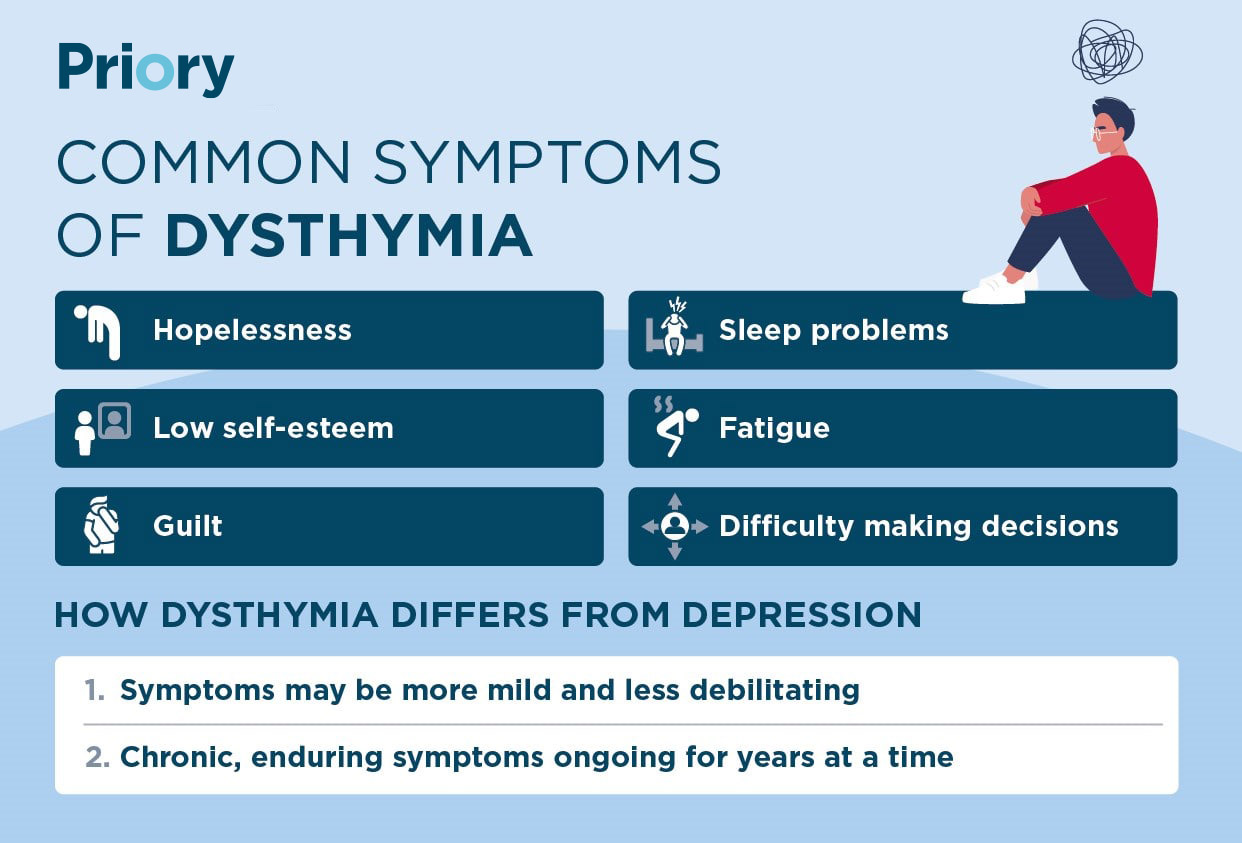
Many of the experiences people with dysthymia go through are similar to other types of depression. Dysthymia causes people to experience low moods, feelings of hopelessness, low self-esteem and a lack of enjoyment in daily life.
Dysthymia is different from depression in the following ways:
The timeframe for your symptoms is central to getting a diagnosis of depression.
To be diagnosed with persistent depressive disorder, your symptoms need to have persisted for over 2 weeks, whereas to be diagnosed with dysthymia, your symptoms need to have been ongoing for at least 2 years.
Dysthymia symptoms can vary from person to person, and many are similar to the core symptoms of depression. Typically, they may consist of persistent feelings of sadness, that can last for years at a time. As well as experiencing an enduring low mood, PDD can also cause:
For those experiencing the condition, it can feel like their low mood and sadness are always present. Coupled with symptoms that don’t tend to be severe, means that persistent depressive disorder is often normalised and simply put down to a person’s personality, as opposed to a serious mental health condition that needs treatment.
If you’ve been suffering with depression, know that you are far from alone. Research conducted on depression suggests that as many as 4.5% of the UK’s population are struggling with the condition.
As with other kinds of depression, there's no one direct cause of dysthymia. It’s more likely that many causes of depression contribute to the development of the condition. These include:
We also know that, depending on your biological and environmental circumstances, you can be more or less likely to develop a condition like PDD. Common risk factors include:
By seeking treatment for depression, you can return to the positive and healthy life you deserve.
In the UK, dysthymia is typically treated using a combination of psychological therapies and, in some cases, medication.
Common treatment options include:
Many people begin by speaking to their GP, who can assess symptoms and discuss treatment options. Depending on your needs, you may be referred for NHS support or choose to access private therapy services.
As PDD is a type of depression, it responds well to a number of therapeutic methods that are used to treat depression. The most common type of therapy used to treat depression is cognitive behavioural therapy (CBT), but dialectical behaviour therapy (DBT) can also be used.
Whichever type of therapy is appropriate for you, they will all involve attending a number of sessions with a highly qualified therapist to:
Therapy sessions can be delivered on a one-to-one basis (in person or as part of an online therapy service), or as part of group or family therapy.
For some people, medication will be the first line of treatment – especially if your depression is severe or there is a history of depression in your family.
Selective serotonin reuptake inhibitors (SSRIs) are the most common antidepressant used to treat depression. Fluoxetine (Prozac) and sertraline (Zoloft) are examples of effective types of this medication.
A wide range of safe and effective medications to treat depression are available, but it’s vital you consult a professional who can prescribe you the right medication to treat your condition. At Priory, our consultant psychiatrists can help you decide if medication is right for you, outlining the best course of treatment for your needs.
It's important to know that with treatment, it’s possible for you to make a full recovery and take back control of your life. If your depression is having a severe effect on how you live your life, consider contacting Priory for world class mental health treatment.
Dysthymia is a form of depression, but it tends to be longer-lasting and may be less severe than major depressive episodes.
To be diagnosed with dysthymia, symptoms typically need to be present for at least 2 years in adults.
Yes, dysthymia can be treated with therapy, medication or a combination of both, and many people see improvements with the right support.

Get free monthly tips, tools and expert videos to support your mental health.
That's all in The Reset, helping you support your wellbeing - directly to your inbox each month.