
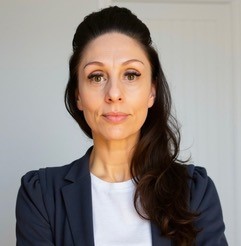
About
Shelly has been working as a psychotherapist at Priory Hospital Woking since November 2017. Earlier in her career, she spent five years working as a mental health assistant at Priory Hospital Mildmay Oaks, a low secure and locked rehabilitation service for males and females with learning disabilities and individuals who are on the autism spectrum.
She also spent four years with the mental health charity MIND as an integrative psychotherapist. Working within diverse London communities, she provided short-term therapy to clients from a wide range of cultural, ethnic, and socio-economic backgrounds, including individuals who had migrated from war-affected regions. Shelly has extensive experience supporting clients presenting with complex psychological difficulties, including trauma, abuse, relationship difficulties, depression, anxiety, addiction, and suicidal ideation.
Training
Shelly completed a BSc (Hons) in psychology with the Open University in 2013, before going on to complete an MSc in therapeutic counselling at the University of Greenwich. Her master’s training adopted an integrative approach to psychotherapy, incorporating psychodynamic, person-centred, and cognitive behavioural therapy (CBT) approaches. Following qualification, Shelly gained accreditation with the British Association for Counselling and Psychotherapy (BACP).
She remains committed to ongoing professional development and has undertaken specialist training in:
- Bereavement therapy
- Creative therapies
- Gestalt chair work
- Third-wave CBT approaches, including dialectical behaviour therapy (DBT)
- Compassion-focused therapy (CFT)
- Mindfulness-based practices
Research interests
For her master’s dissertation, Shelly explored men’s mental health, focusing on the impact of societal expectations on help-seeking behaviours, prompted by concerning male suicide statistics. Her research highlighted common barriers that prevent individuals from accessing support and examined strategies to overcome these challenges in therapy. She continues to maintain an interest in this area, with a particular focus on men’s postnatal depression.
Feedback
The below feedback is from patients Shelly has worked with:
- “Thank you hardly seems to cover the gratitude I have, you’ve made the journey easy and painless”
- “This experience has been very valuable to me”
- “Thank you for your understanding, it gave me a safe place to open up”
- “Thank you so much for your help and guidance”
- “It has turned my life around”
- “It gave me the opportunity to understand myself better”
- “I have developed the strength to look forward with confidence, instead of back with fear”