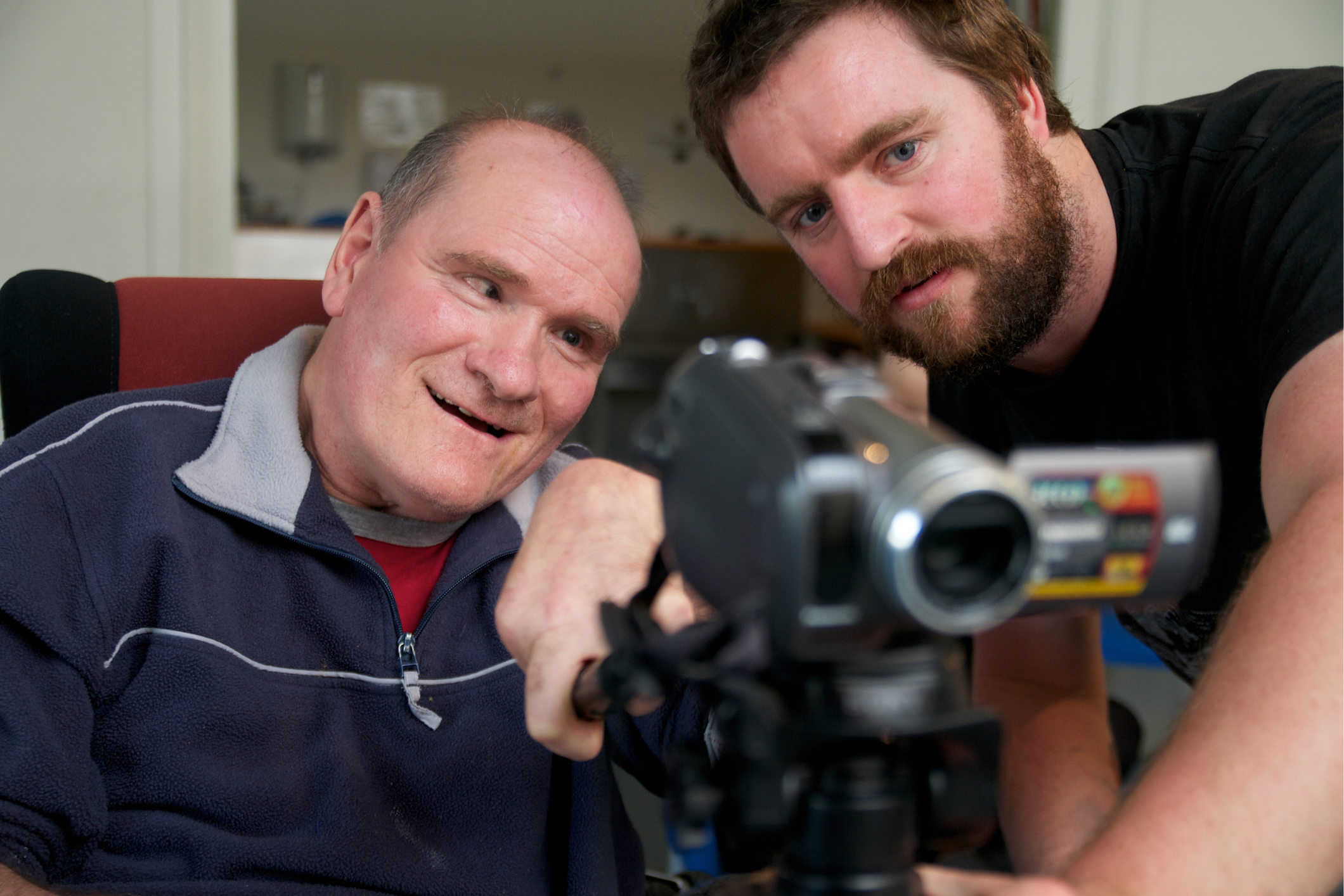
Background
John had lived in a secure hospital setting for more than 40 years before moving to Leonards Croft.
Prior to his transition, his communication was extremely limited, with a vocabulary of around 20 words. At times, the words he used did not reflect his needs, making it difficult for him to communicate effectively. This often led to frustration and behaviours that challenged, impacting both John and those supporting him.
Presentation and early challenges
When John first arrived at Leonards Croft, there were many aspects of daily life that he found difficult or would refuse to engage with.
These included:
- Leaving the house
- Taking part in community activities
- Engaging in activities within the home
- Personal care routines
- Trying new experiences
- Coping with changes to routines and rituals
His communication difficulties and reliance on established routines often limited his opportunities and increased his anxiety when faced with change.
A focused and collaborative approach
John's transition to Leonards Croft was carefully planned over a four-week period. During this time, staff visited him within the hospital environment and worked closely alongside the existing team who knew him well.
The service also established early links with the local Intensive Support Team (IST), ensuring they were involved throughout the transition and able to provide ongoing support once John moved into the community.
Partnership working extended to community nursing teams and other professionals to ensure the right support was in place from day one. A community speech and language therapist provided specialist training to staff, helping them understand John's communication needs and ensuring a consistent approach across the team.
Key elements of support included:
- A structured four-week transition programme
- Close collaboration with hospital staff and community professionals
- Intensive Support Team involvement throughout the transition
- Specialist speech and language therapy input
- Staff training tailored to John's communication needs
- Consistent, person-centred support focused on independence and choice
Building independence
Since moving to Leonards Croft, John has made significant progress across many areas of his life.
One of the most notable achievements has been the development of his communication skills. His vocabulary has increased from around 20 words to more than 120 words, and he continues to learn and use new words regularly. He is now able to form full sentences to express his wants and needs and can identify specific staff members he wishes to spend time with.
As his communication skills have improved, so has his confidence and ability to engage with the world around him. He now participates in activities both within the home and in the community and is able to communicate his preferences. Trips to the seaside have become a particular favourite.
John has also become more accepting of new ideas and can make simple choices about his day-to-day life, helping him take greater control of his routines and activities.
Daily life and interests
John now takes an active role in many aspects of daily living and shows pride in his achievements.
He independently engages in personal care, showering every day and taking pride in his appearance. Staff regularly hear him describe himself as a "smart man".
His involvement in daily living tasks has also increased significantly. He now helps prepare meals, makes his bed, supports staff in maintaining a clean environment, and takes part in shopping activities.
John's interests have expanded too. When he first arrived, he would only watch two television programmes. Today, he enjoys a much wider range of entertainment and confidently tells staff what he would like to watch.
Positive outcomes
John's progress has led to a range of positive outcomes, including:
- Vocabulary increasing from approximately 20 words to more than 120 words
- Ability to use full sentences to communicate wants and needs
- Greater self-expression through speech and singing
- Increased participation in activities at home and in the community
- Improved personal care and independence
- Greater involvement in daily living tasks
- Increased tolerance of changes to routines and plans
- An additional 20 minutes of tolerance when waiting, providing more flexibility and choice
- Attendance at medical appointments, including blood tests
- Reduction in support requirements from 2:1 to 1:1 during routines
- Significant reduction in incidents of behaviours that challenge
These improvements appear closely linked to John's increased communication skills and ability to understand and rationalise situations that previously caused anxiety or frustration.
Looking ahead
The focus remains on continuing to build John's communication skills, independence, and confidence within the community.
The team will continue working closely with healthcare professionals, community services, and John's family to ensure he has ongoing opportunities to develop new skills, make choices, and enjoy meaningful experiences.
A meaningful transition
John's journey demonstrates the importance of effective transition planning, partnership working, and person-centred support.
By working closely with professionals, family members, and those who knew him well, the team at Leonards Croft helped create a smooth transition from long-term hospital care into the community. Today, John enjoys greater independence, improved communication, and a significantly enhanced quality of life.