
Stephen’s journey at Hill House
Read how Stephen moved from high levels of support and limited access to the community, to greater independence and inclusion through consistent, multidisciplinary care at Priory Hill House.

Stephen, an individual with a learning disability, rapid cycling bipolar disorder, and who is on the autism spectrum, has made meaningful progress through a structured and collaborative approach at Priory Hill House. With a focus on medication review, communication support, and gradual exposure to community activities, he has reduced behaviours that challenge and increased his independence.
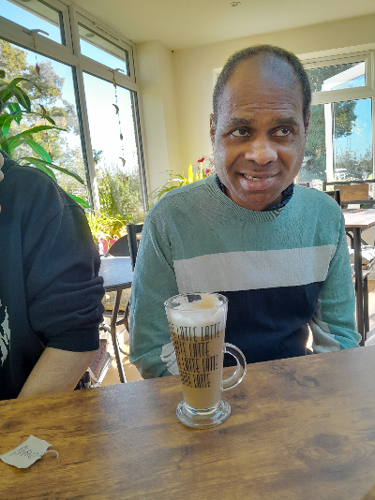
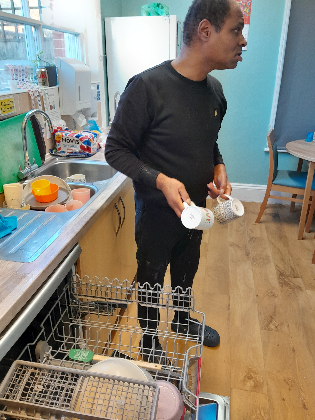


Stephen is an individual with a learning disability, rapid cycling bipolar disorder, and who is on the autism spectrum. There is limited information about his early life, and it is clear that he requires long-term, consistent support.
Stephen has a long history of behaviours that challenge, which at times required high levels of support, including 3:1 staffing in the community. These behaviours included grabbing staff, biting his arms, and displaying intimidating behaviours towards others.
As a result, he required 2:1 support for community activities for many years, which significantly limited his access to everyday experiences such as restaurants, cinemas, and social events.
A key development in Stephen’s care has been the review and management of his medication. With input from neurology, the team introduced a careful programme of reduction and monitoring, resulting in improved mood and overall presentation.
Alongside this, structured support plans were developed to gradually increase his independence. This work was delivered in collaboration with the speech and language therapy team, supporting communication and identifying meaningful activities.
Through a consistent and phased approach, Stephen has made clear progress in his independence. He is now able to access the community with reduced support, enabling him to engage in a wider range of experiences.
Stephen prefers physical, engaging activities, particularly spending time outdoors walking or in the garden. He also participates in household tasks where appropriate, supporting his routine and sense of involvement.
While he does not typically engage in structured indoor activities, increased access to the community has enabled him to take part in experiences aligned with his preferences.
Stephen’s progress has been recognised by both staff and professionals involved in his care:
One team member reflected: “It has been so great to see Stephen involved with everyone else and that he doesn’t miss out any more.”
The focus remains on continuing to build on this progress by identifying further opportunities that align with Stephen’s interests and expanding his independence within the community.
Stephen’s journey highlights the impact of a consistent, collaborative approach. Through structured support and personalised care, he has moved from high levels of restriction to greater independence and inclusion in everyday life.