Priory Notts Hill House
Specialist neurological rehabilitation and functional independence

Notts Hill House is a specialist neurological rehabilitation service located in Torquay, Devon, supporting adults with acquired brain injury (ABI), traumatic brain injury (TBI), stroke and a range of neurological conditions and complex physical disabilities.
Our service combines individualised neurological rehabilitation with specialist residential support, helping people develop and maintain physical function, everyday living skills and greater independence.
We offer short-term, respite, medium and longer-term placements, depending on individual needs and rehabilitation goals.
Our facilities at Victoria House include:
Click here to enable this content
We support individuals with a range of conditions and presentations, including:
Acquired brain injury (ABI)
Traumatic brain injury (TBI)
Stroke
Multiple sclerosis (MS)
Parkinson's disease
Huntington's disease
Motor neurone disease (MND)
Other progressive neurological conditions
Spinal conditions and associated physical disabilities
Epilepsy
Neurological conditions with associated communication difficulties
Acquired brain injury with co-existing learning disability or mental health needs, subject to individual assessment
We can also support individuals with complex physical and functional needs, including:
Significant mobility limitations
Hoisting and specialist moving and handling requirements
Specialist positioning and postural support
Percutaneous endoscopic gastrostomy (PEG) feeding
Nasogastric (NG) feeding
Support with personal care and everyday living activities
Working collaboratively with residents, families, commissioners and healthcare professionals, our experienced team develops individualised rehabilitation and support plans focused on meaningful goals, maximising independence and improving quality of life.
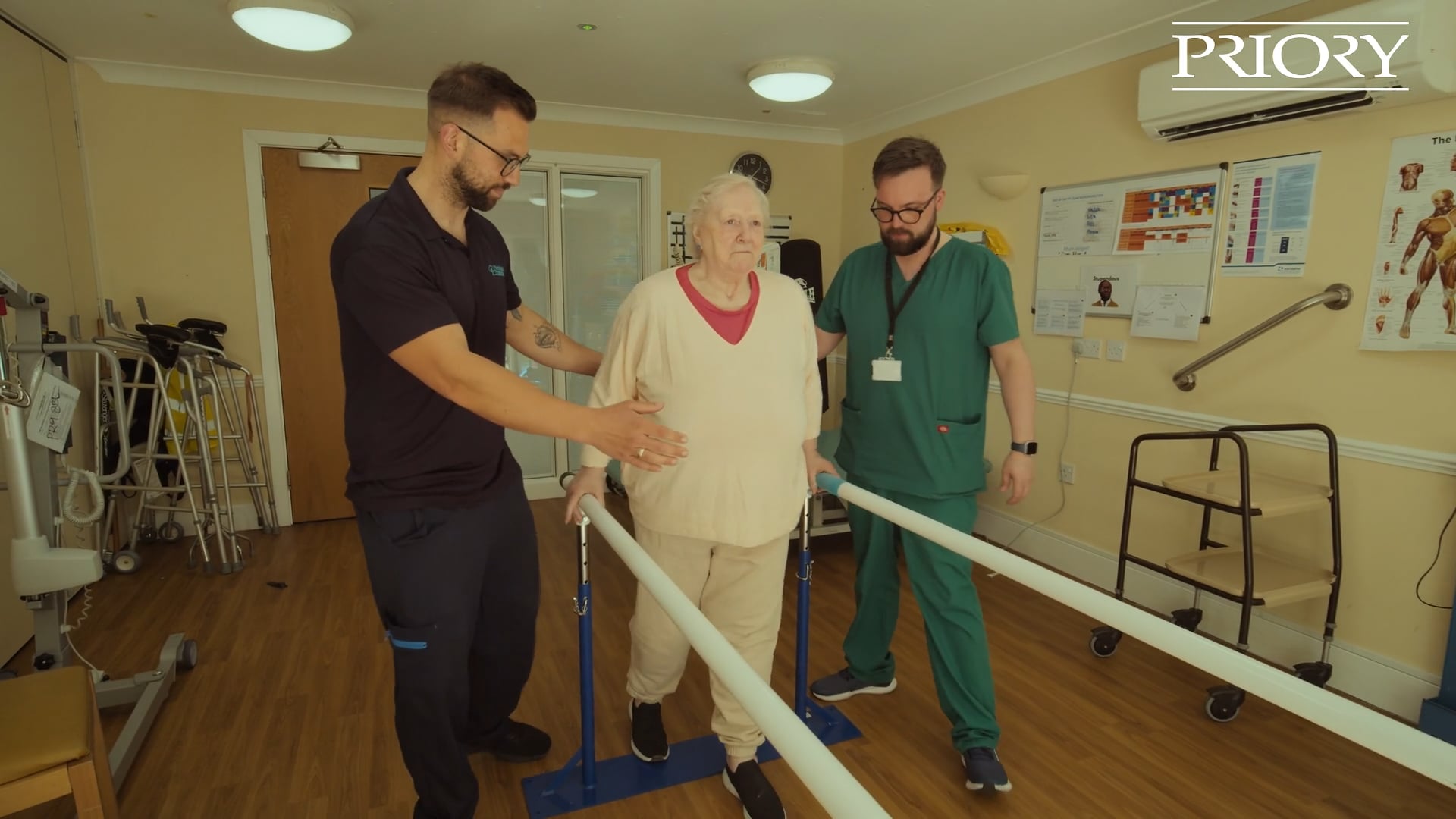
Notts Hill House incorporates specialist equipment to support individuals with neurological conditions and complex physical disabilities.
Our specialist facilities and equipment include:
The home also provides comfortable communal spaces, including a large lounge, dining room, activities room and quiet room.
Outside, residents can enjoy a large garden with:
All of our bedrooms are comfortable, welcoming and can be personalised to individual tastes. There are 13 bedrooms in the main house, 12 of which have en-suite facilities, including a self-contained flat. In addition, there is a two-bedroom annexe with its own bathroom.
Where appropriate, our accommodation and rehabilitation facilities provide opportunities for individuals to develop and practise everyday living skills, supporting progression towards greater independence and future accommodation planning.
In summary, our bedrooms have features such as:
Our rehabilitation approach includes:
Physical rehabilitation and mobility: Physiotherapy programmes focused on mobility, strength, balance, transfers, positioning and functional movement.
Functional rehabilitation and daily living skills: Occupational therapy supporting personal care, cooking, household tasks, everyday routines and practical independence.
Neurological rehabilitation: Individualised support for people with acquired brain injury, stroke, traumatic brain injury and progressive neurological conditions.
Complex physical support: Specialist moving and handling, hoisting, positioning, mobility equipment and support with physical care needs.
Cognitive and communication support: Individualised strategies supporting cognition, communication and participation, with access to external specialist services where appropriate.
Community participation: Supporting individuals to develop confidence, access local amenities, maintain relationships and participate in meaningful activities.
Independence and future planning: Working towards appropriate individual outcomes, including greater independence, community participation or ongoing specialist residential support.
At Notts Hill House, meaningful activities form an important part of neurological rehabilitation, wellbeing and everyday life.
Each individual has a personalised activities programme reflecting their interests, abilities, rehabilitation goals and personal preferences.
Our dedicated Activities Coordinator works alongside our physiotherapy, occupational therapy and support teams to provide opportunities that promote physical, cognitive, functional and social skills.
Activities take place within the home and local community and may include:
Cooking, meal preparation and household activities
Gardening and outdoor activities
Physical exercise and mobility-focused activities
Social and recreational activities
Community outings and accessing local amenities
Opportunities to explore education, volunteering or employment
Activities supporting communication, confidence and independence
All referrals are considered individually, taking account of the person's neurological presentation, rehabilitation goals, physical support requirements and the service's ability to safely and appropriately meet their needs.
Our rehabilitation pathway
Hospital, inpatient rehabilitation or other appropriate referral setting
↓
Individual assessment and rehabilitation goal-setting
↓
Specialist neurological rehabilitation and residential support
↓
Physiotherapy, occupational therapy and functional skills development
↓
Everyday living skills, community participation and independence-focused rehabilitation
↓
Review of progress and onward planning
↓
Return home, supported living, further rehabilitation or longer-term specialist residential support
Each person's pathway is tailored to their neurological presentation, rehabilitation potential, physical needs and personal goals.
Our physiotherapy and occupational therapy provision works collaboratively with our experienced support team to incorporate rehabilitation strategies into everyday activities and routines, helping individuals practise and maintain skills beyond formal therapy sessions.
Our team includes:
Our team receives specialist training tailored to the needs of the individuals we support, including:
Additional specialist input, including speech and language therapy and psychology, can be accessed through external or community services according to individual needs.
Our team uses person-centred approaches and outcome measures, including the Outcomes Star™, to support individuals in identifying goals and reviewing progress.
At Notts Hill House, we are committed to providing a welcoming, supportive environment where every individual is encouraged to achieve their personal goals and maximise their independence.
Our experienced team works collaboratively to provide specialist neurological rehabilitation and personalised support, helping residents develop and maintain physical abilities, everyday living skills and confidence.
We take pride in our dedicated staff team and the positive relationships we build with residents, families and healthcare professionals.
Notts Hill House site leader
When my relative moved from the hospital into the care home setting, it was all about making sure his rehabilitation needs were met. I know that I was very much part of that, to make sure that everything was included that he wanted


We support our residents to attend family events and visit their family homes. We will work with the resident and their relatives to ensure possible risks are managed and that everyone is supported. This may mean the individual’s key worker will come along on the visit. For those who are unable to visit their own home, we can support your loved ones with video calls.
We encourage family and friends to visit their loved ones, we do ask that we are informed in advance of all visits just so we can make people aware of who is in their home.
Yes - we strive to keep the loved ones of our residents involved in their care. We can provide regular telephone updates, utilise virtual meetings such as Microsoft Teams, or send over photos to show what things the resident has been getting up to. Where appropriate and in line with best interest decisions we will often invite family and loved ones to partake in reviews of their loved ones care.
Everyone who stays with us are supported to call their loved ones any time, via phone or video call. Family and friends are also able to call as often as they like. Staff are on hand 24 hours a day to facilitate phone calls with loved ones.
Bedrooms are all furnished and residents are supported to personalise them to suit their needs and wishes. We can help people decorate their space, and encourage them to bring personal items and furnishings to make their room feel their own.
Yes - due to the nature of the service, external doors are locked with keypad entry systems. However, every person be risk assessed, which details the level of security needed to keep them safe. We have a large garden area and courtyard where individuals can freely exit and enter the building, and this has wheelchair access.
Our residents at Notts Hill House have the optional use of their own kitchen, where we encourage the development of independent living skills. There is also a commercial kitchen which caters for all individual tastes and dietary requirements. Our team are on-hand to support people with their needs around mealtimes, including ensuring people get adequate hydration and nutrition.
Residents are given help to do their own laundry, as part of promoting independence. Our staff are on hand to offer support if and when it is required. Our team will ensure that residents always have access to clean clothes and bedding.
People are encouraged to do as much as they are able to for themselves, however staff maintain the communal areas and are on-hand to support should people need an extra hand with housekeeping.
Residents are not allowed to bring illegal substances onto the premises. We would also ask that people do not bring high risk personal items into the house. We may place restrictions on some items where the risks cannot be appropriately managed, such as non-approved drugs and medications, solvent-based products and lighters.
At Notts Hill House, activities are personalised according to each individual's interests, abilities, rehabilitation goals and preferences.
Our activities coordinator works alongside our physiotherapy, occupational therapy and support teams to provide opportunities for meaningful participation within the home and local community.
Activities may include cooking, gardening, physical exercise, leisure activities, community outings and opportunities to develop everyday living skills.
Where appropriate, activities are linked to individual rehabilitation goals, supporting mobility, confidence, functional independence and community participation.
We use the PROACT-SCIPr-UK® framework, which means we focus on proactive strategies, rather than physical intervention. We require our care plans which include restrictions to be assessed frequently, for example procedures for interventions such as pro re nata (PRN) medication are regularly reviewed and removed, where possible.
Yes, we encourage families and extended support providers to be involved with the care plans. We use a variety of communication tools to work collaboratively with the person we care for to co-produce the plans so they are tailored to their needs. Care plans are regularly reviewed, and family members will be asked for their input, in line with the Mental Capacity Act and best interests.
There is a large off-road car park to the front of the property, which visitors can access.
Notts Hill House is a non-smoking building, however for those who do wish to smoke there is a dedicated smoking area within the grounds. We aim to promote healthy lifestyles and can support residents with smoking cessation programmes, if this is something they wish to pursue.
Our fees can vary, and are based on an assessment of each individual's needs. Many people are eligible for financial help towards the cost of support, and this funding can be accessed by contacting your local authority. Once funding has been agreed, we will work with your local care team to put together a bespoke package of care. Please note, referrals for NHS or Local Authority funded services must come from a referring organisation.
At Notts Hill House, each individual receives a personalised rehabilitation and support plan based on their neurological condition, physical abilities, personal goals and individual needs.
Our on-site physiotherapy and occupational therapy provision supports rehabilitation focused on mobility, physical function, everyday living skills and greater independence.
Our experienced support team works collaboratively with therapists to help incorporate rehabilitation strategies into daily activities and routines.
Rehabilitation goals are reviewed regularly, with programmes adapted according to individual progress, changing needs and aspirations.
Where additional specialist input is required, including speech and language therapy or psychology, this can be explored through external or community services.
We welcome referrals for adults requiring specialist neurological rehabilitation at different stages of recovery, including individuals ready to transfer directly from an acute hospital setting, those requiring ongoing or longer-term rehabilitation, and individuals working towards greater independence and community discharge.
Referrals can be made through the individual’s social care team or, if relevant, their local health authority. Use the buttons below, or email your service development manager.