Call Us
Tap on a number to call
Enquire
Log In
Menu
Contact Us
Call Us
Tap on a number to call
Enquire

Depression in men

Depression in men can manifest in unique ways, but acknowledging the signs is the first step towards finding the support you need."

Take control of your mental health with Priory’s tailored treatment options for men’s depression, designed to help you regain your well-being.

Call Us
Tap on a number to call
Book therapy
Page last updated:
Written by: Will Hinch
Mental health & addictions writer
Clinically reviewed by: Dr Leon Rozewicz
Consultant psychiatrist and specialist in adult attention deficit hyperactivity disorder (ADHD) at Priory Hospital North London

Depression affects men just as often as women, but it can look and feel very different. Many men minimise their symptoms, hide how they are feeling or assume they should simply cope on their own. This can make depression harder to recognise and treat.

Reaching out for support is a positive and courageous step. You do not have to manage this alone.

What is depression in men?

Depression is a mental health condition that affects your thoughts, emotions and ability to function day to day. While anyone can experience depression, men often show symptoms through changes in behaviour rather than openly expressing sadness.

Social pressures to appear strong or self-reliant can make it harder for men to recognise when they are struggling or to ask for help. Over time, this can allow depression symptoms to become more severe.

Understanding how depression presents in men is an important first step towards getting the right treatment.

Signs and symptoms of depression in men

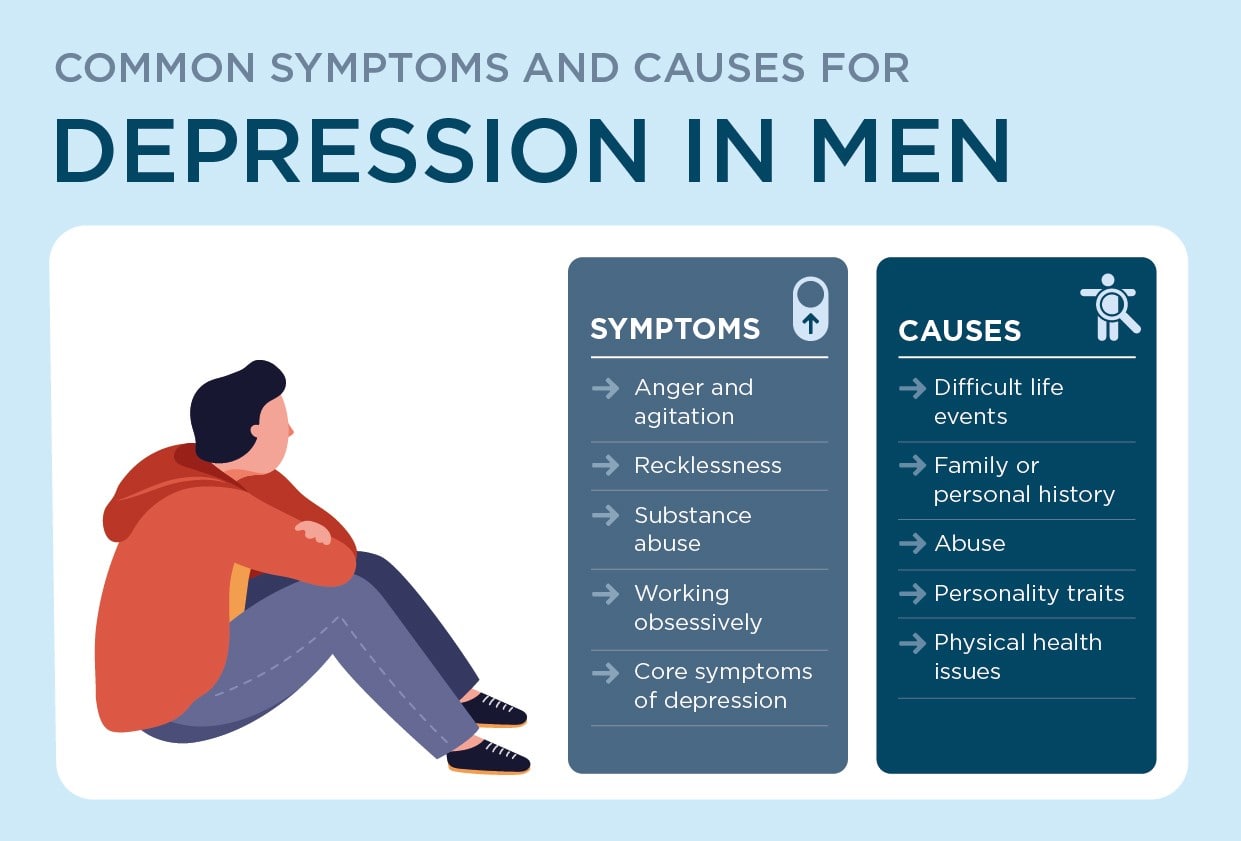
Symptoms and causes of depression in men

Common symptoms affecting all genders

These symptoms can appear in both men and women:

  • Persistent sadness or hopelessness
  • Anxiety or agitation
  • Low motivation or loss of interest in hobbies
  • Sleep problems, such as insomnia or oversleeping
  • Changes in appetite or weight
  • Difficulty concentrating
  • Feeling guilty or overwhelmed
  • Low energy or fatigue

Symptoms more commonly experienced by men

Men may display depression differently, often through behaviour:

  • Anger, irritability or sudden outbursts
  • Increased risk-taking, such as dangerous driving
  • Drinking more alcohol or relying on drugs to cope
  • Working excessively or avoiding home responsibilities
  • Withdrawing from friends, family or relationships
  • Physical symptoms such as headaches, stomach problems or chronic pain
  • Becoming controlling or reactive in relationships
  • Masking distress by saying they are fine

These symptoms are not a sign of weakness. They are indicators of a health condition that can be treated.

Why men may experience depression differently

Men can experience depression differently for several reasons:

  • Social expectations to appear strong or unemotional
  • Fear of judgement or being perceived as weak
  • Difficulty opening up about feelings
  • Using work, alcohol or exercise to distract from distress
  • Avoiding help until symptoms escalate
  • Childhood messages discouraging emotional expression

Understanding these patterns can make it easier to recognise when support is needed.

Take our free depression test

If you need help assessing yourself, our free assessment tool could help.

What causes depression in men?

Depression in men can develop for many reasons, including:

  • Stressful life events such as job loss, financial pressure, divorce or bereavement
  • Family or personal history of depression
  • Childhood trauma, abuse or neglect
  • Excessive alcohol use or reliance on substances
  • Chronic pain or long-term physical health conditions
  • Personality traits such as perfectionism, self-criticism or high anxiety
  • Social isolation or limited emotional support

These causes are not your fault. With the right support and treatment, symptoms can improve.

When to seek help

You should consider seeking professional support if:

  • Symptoms last longer than two weeks
  • Your work, relationships or daily life are affected
  • You find yourself withdrawing from others
  • You are using alcohol or drugs as a coping strategy
  • Anger, irritability or risk-taking behaviours are increasing

If you are experiencing suicidal thoughts or feel unable to stay safe, seek urgent help:

Getting help early can make treatment more effective and reduce the impact on your life.

How depression is treated at Priory

Depression is a treatable condition. At Priory, we offer personalised treatment options tailored to your symptoms, needs and preferences. All care is delivered in line with National Institute for Health and Care Excellence (NICE) guidance.

Therapy

Talking therapy can help you understand your symptoms, identify triggers and develop practical coping strategies. Common approaches include:

  • Cognitive behavioural therapy (CBT)
  • Interpersonal therapy (IPT)
  • Acceptance and commitment therapy (ACT)
  • Compassion-focused therapy (CFT)
  • Trauma-focused approaches, where relevant
  • DBT-informed techniques for emotional regulation

Therapy can take place individually or in groups, either in person or online.

Medication

Antidepressants such as SSRIs may be recommended to help stabilise mood. Depression medication is carefully prescribed and monitored by a psychiatrist and may be used alongside therapy.

rTMS

Repetitive transcranial magnetic stimulation (rTMS) is a non-invasive treatment available at Priory Wellbeing Centre Harley Street. It may be considered if other treatments have not provided sufficient improvement.

Inpatient depression treatment

For severe symptoms or safety concerns, inpatient treatment offers:

  • Round-the-clock clinical care
  • A structured therapeutic programme
  • A safe, supportive environment
  • Time away from daily pressures to focus on treatment

Day care and outpatient therapy

Flexible treatment options allow you to receive structured support while continuing with work, family life and other responsibilities.

How to help a man with depression

If you are supporting a partner, family member or friend, these steps can help:

  • Learn about depression and how it presents in men
  • Start gentle conversations without pressure
  • Use “I” statements to reduce defensiveness
  • Encourage professional support and offer help arranging appointments
  • Support healthy routines such as sleep, exercise and balanced eating
  • Check in regularly, even if he avoids talking at first
  • Look after your own wellbeing

Your support can help him feel understood and less alone.

Get help for depression in men

Depression in men can feel isolating, but effective treatment is available. At Priory, we offer fast access to confidential assessments and specialist support across the UK.

Whether you need structured inpatient treatment or flexible outpatient therapy, our experienced clinicians can help you take the next step.

Book a confidential mental health assessment today to explore your treatment options.

Contact us to make an enquiry or for more information

Call Us
Tap on a number to call
Enquire