Call Us
Tap on a number to call
Enquire
Log In
Menu
Contact Us
Call Us
Tap on a number to call
Enquire

Depression in women: types, causes and signs

Depression in women can stem from various life challenges, but identifying the signs early allows you to seek the support you deserve.

Begin your recovery journey with Priory’s tailored treatment options, designed specifically to address the unique causes of depression in women.

Call Us
Tap on a number to call
Book therapy
Page last updated:
Written by: Lottie Storey
Mental health & addictions writer and therapist
Clinically reviewed by: Dee Johnson
Addiction Therapist at Priory Hospital Chelmsford

Depression is a common, treatable health condition that affects how you think, feel and physically function. While it can affect anyone, depression is nearly twice as common in women as men. 

Many women experience depression throughout their lives. They can find it impacts on them in lots of different ways, including physically, emotionally, professionally and socially, as well as affecting their relationships.

Signs and symptoms of depression in women

Depression in women often doesn't look like constant sadness. Instead, it may be more like a persistent sense of being overwhelmed, exhausted or emotionally numb.
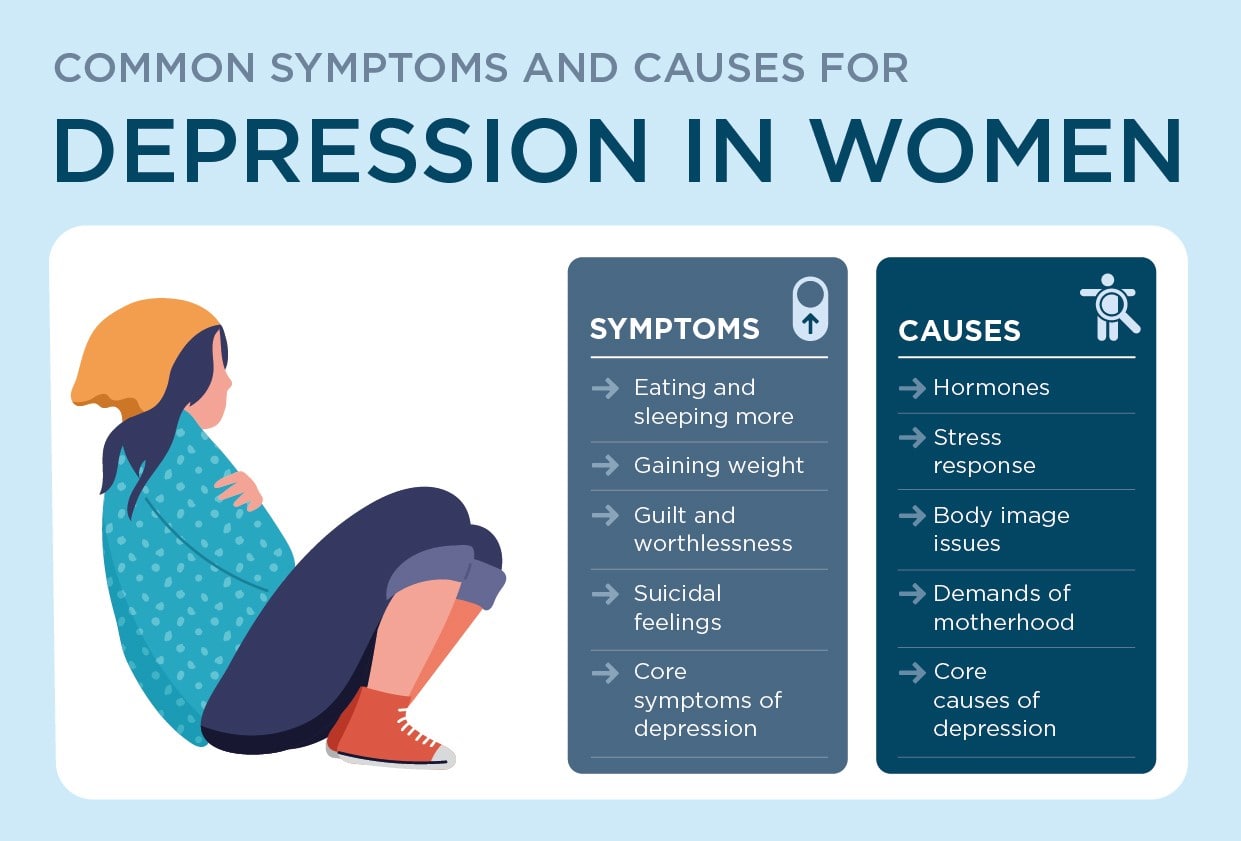
Symptoms and causes of depression in women

Here are some patterns to look out for:

  • Emotional flatness or irritability: you might not feel sad but you might feel like the joy has been drained out of things you used to love. Small setbacks might trigger an uncharacteristic short fuse or a sense of constant agitation
  • Physical heaviness: depression often feels physical, like a lead weight in your limbs, chronic tension headaches or digestive issues that don’t have an obvious cause
  • The sleep-energy cycle: you may struggle to fall asleep at night because your mind is racing. During the day, you may feel a deep exhaustion that doesn’t lift with rest or caffeine
  • Cognitive fog: you might feel like you’ve become forgetful or lazy. Tasks that you used to find simple (like planning a meal or responding to an email) can feel overwhelming

Because many women balance demanding roles at home and work, symptoms of depression are often dismissed as stress or a personal failure to keep up.

Some women with depression feel like they’re performing a role rather than living their real life. It might look like you’ve got everything under control on the outside while on the inside, you feel disconnected.

How depression can present differently in women and men

Gendered patterns can influence how symptoms are experienced, expressed or recognised. Here are some of the ways depression may differ in women and men:

FeatureTendency in womenTendency in men
Primary moodMore likely to report sadness, worthlessness or emptiness.Often manifests as irritability, escapism or unexplained anger.
Physical signsFrequent sleep disturbances and a heavy physical fatigue.Often reported as physical pain, such as backaches or digestive issues.
Coping styleMay involve rumination (overthinking) and seeking social support.May involve acting out through risk-taking or working longer hours.
Energy levelsOften a visible drop in energy or slowing down.Can appear as restless energy or a constant need to stay busy.

Take our free depression test

If you need help assessing yourself, our free assessment tool could help.

Video: what causes women's mental health issues?

Why depression is more common in women

According to recent NHS data, approximately one in four women (around 24%) will experience a common mental health problem like depression or anxiety, compared to one in seven men (around 15%).

This difference may be due to a combination of biological, social and psychological factors that intersect throughout a woman’s life, including:

  • Biological and hormonal transitions: women experience significant hormonal shifts during puberty, pregnancy, postpartum and menopause. While hormones alone don’t cause depression, these transitions can affect the brain chemistry that regulates mood, making some women more vulnerable to depressive episodes during these times
  • The ‘double burden’ of responsibility: women are statistically more likely to balance multiple roles simultaneously, such as paid employment alongside the majority of unpaid domestic work and caregiving for children or elderly relatives. This second shift can lead to chronic stress and burnout
  • Social and economic pressures: In the UK, women are more likely than men to live in poverty, experience domestic or sexual violence and face workplace discrimination. These systemic pressures create a higher baseline of life stress, which is a significant trigger for depression
  • Differences in seeking help: women are generally more likely than men to talk about their feelings and visit their GP. This means they are more likely to be diagnosed and recorded in national statistics, whereas depression in men may go unrecognised or be masked by other behaviours

Life stages and depression in women

Throughout adulthood, reproductive transitions can act as triggers for some women, though it’s important to note that depression isn’t an inevitable part of these stages:

  • The menstrual cycle and premenstrual dysphoric disorder (PMDD): while many women experience mild mood shifts before a period, PMDD is a severe form of depression and irritability that can significantly disrupt daily life and relationships
  • Pregnancy and the postnatal period: the ‘baby blues’ may be common and relatively short-lived, but persistent low mood during pregnancy (antenatal) or after birth (postnatal) is a different, more serious condition. It often involves intense anxiety, low mood, exhaustion or a feeling of being disconnected from the baby
  • Perimenopause and menopause: the years leading up to the end of menstruation involve significant hormonal fluctuations. For some women, the menopause can trigger a first-time depressive episode or the return of previous symptoms, often accompanied by brain fog and sleep disturbances

It’s a common misconception that depression is ‘just hormones’ during these specific times. In reality, depression can occur at any stage of life. 

When to seek help

If you think you might have depression, it’s really important to reach out for support, especially if: 

  • Your symptoms last longer than 2 weeks
  • Your daily life, work or relationships are being affected
  • You’re having thoughts of hopelessness, self-harm or suicide

Don’t wait to see if things improve. Help is out there and it’s important to take the first step as soon as possible.

Treatment and support for depression in women

Treatment for depression isn’t a one-size-fits-all approach. In the UK, NICE guidelines recommend a stepped care model. This means starting with the least intrusive treatment that’s likely to help, and increasing the level of support if your symptoms persist or become more severe.

Many women benefit from a combination of the following approaches:

  • Talking therapies: like include cognitive behavioural therapy (CBT) or interpersonal therapy (IPT). These are often the first line of treatment
  • Medication: antidepressants, such as selective serotonin reuptake inhibitors (SSRIs), may be recommended, particularly for moderate to severe depression. These medications work by helping to regulate brain chemicals linked to mood, sleep and emotional regulation. Medication is often most effective when combined with therapy
  • Lifestyle and wellbeing support: treatment may also include approaches that support overall wellbeing. This might involve exercise or movement, mindfulness-based meditation, improving sleep routines, or connecting with supportive community or peer groups

From outpatient and day care options to more intense residential inpatient options, depression treatment can also be delivered at different levels depending on the severity of your symptoms and how much support you need. 

You can move between these levels of support as your needs change, stepping up to more intensive care or stepping down as you begin to recover.

Getting support

You don't need to have all the answers or a formal diagnosis to ask for help. Beginning with a conversation is often an effective way to start. As initial steps, you could speak to your GP, self-refer into services like access NHS talking therapies, or talk to a trusted friend.

Alternatively, contact a private mental health provider of services such as Priory offer confidential mental health assessments with experienced clinicians. This can help you understand what you’re experiencing and explore the most appropriate treatment options.

Contact us to make an enquiry or for more information

Call Us
Tap on a number to call
Enquire