
Emotionally unstable personality disorder (EUPD)
You don't have to struggle with a mental health condition - help is available.



Emotionally unstable personality disorder (EUPD) can feel overwhelming, but with the right support, it is treatable. Understanding your symptoms and accessing specialist care can help you feel more emotionally stable, improve your relationships and regain a sense of control in everyday life.
At Priory, we offer personalised, evidence-based treatment for EUPD, designed to support you at every stage of your mental health journey.
Emotionally unstable personality disorder, also known as borderline personality disorder (BPD), is a mental health condition that affects how you experience emotions, how you see yourself and how you relate to others.
People living with EUPD often experience intense and rapidly changing emotions, difficulties coping with stress and challenges within relationships. You may feel overwhelmed by your feelings, act impulsively or struggle with fears of rejection or abandonment.
These experiences can make daily life feel unpredictable and exhausting. However, specialist treatment can help you build emotional stability, develop healthier coping strategies and improve how you relate to yourself and others.
Symptoms of EUPD vary from person to person, but commonly include:
If you recognise these experiences in yourself, it may be a sign that professional support could help.
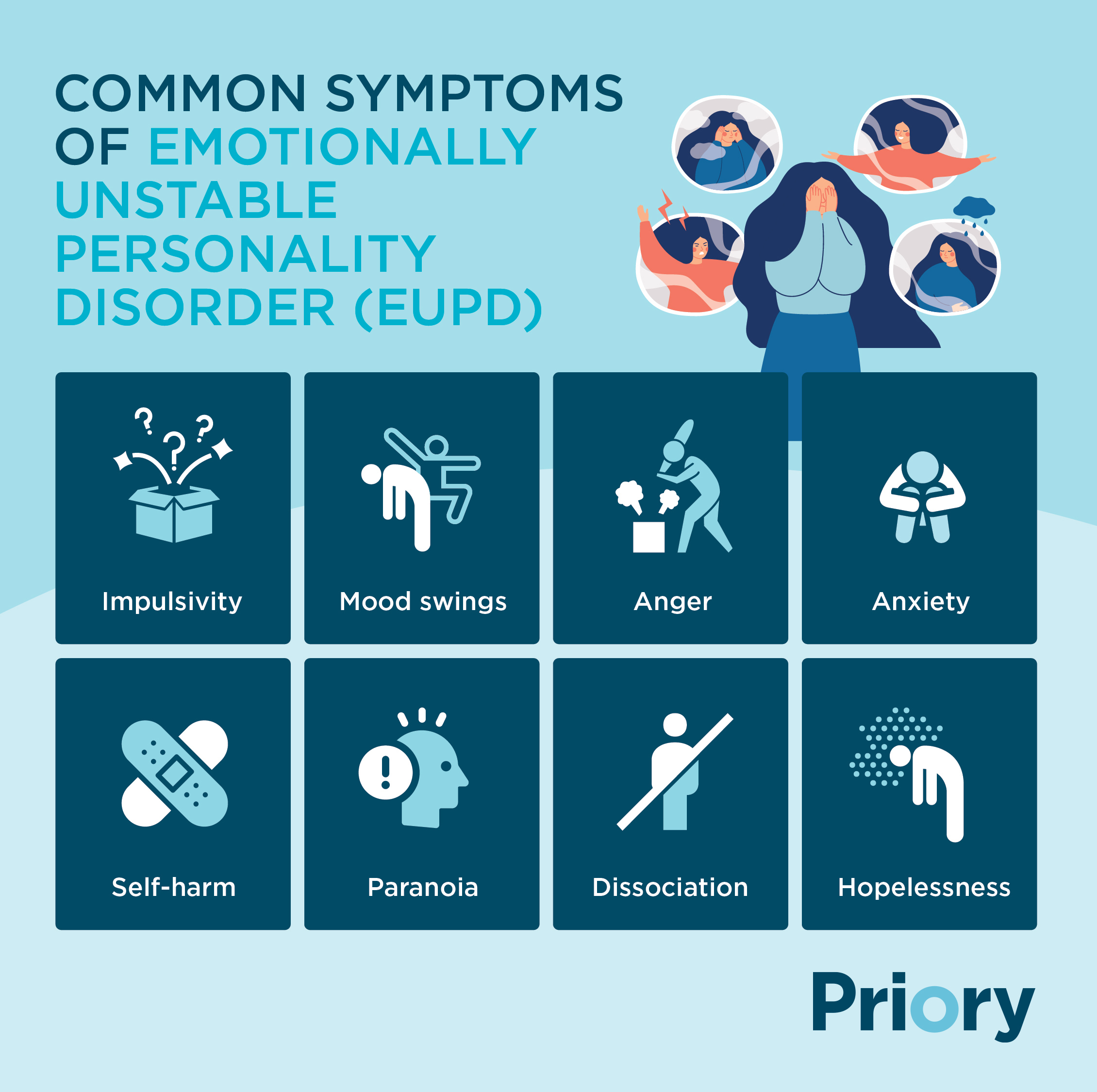
EUPD symptoms can affect many areas of life, including relationships, work and emotional wellbeing. Some people try to cope alone due to shame or fear of judgement, but EUPD is a recognised mental health condition and specialist treatment can make a meaningful difference.
You may wish to seek treatment if:
Asking for help is a positive step and does not mean you have failed. Support is available.
At Priory, we provide specialist treatment for emotionally unstable personality disorder, focusing on emotional regulation, practical coping skills and long-term wellbeing.
Our programmes follow National Institute for Health and Care Excellence (NICE) guidelines and are delivered by experienced psychiatrists, psychologists and therapists who specialise in personality disorders.
Treatment aims to help you better understand your emotional responses, reduce impulsive or harmful behaviours and develop healthier ways of coping with everyday challenges.
We offer a range of treatment options, depending on your needs and circumstances.
Inpatient treatment provides a structured and supportive environment with 24-hour care. This option may be recommended if symptoms feel severe or if you are experiencing significant emotional risk.
Inpatient treatment can include:
The focus is on helping you develop new coping skills, establish healthy routines and feel safer managing your emotions.
If your symptoms are less severe, or if you are stepping down from inpatient care, outpatient or day care treatment may be suitable.
These options allow you to:
The frequency and format of sessions will depend on your individual needs.
Treatment for EUPD uses a range of evidence-based therapies, designed to support emotional regulation, self-understanding and healthier relationships.
DBT is one of the most effective treatments for EUPD. It helps you to:
DBT focuses on validating your experiences while supporting safer, more balanced responses to emotional triggers.
MBT helps you better understand your own thoughts and feelings, as well as those of others. It supports you to pause and reflect before reacting, rather than responding impulsively.
This approach can be especially helpful if you struggle with misunderstandings in relationships or feel unsure about your own emotional experiences.
Your treatment plan may also include:
EUPD treatment can help you to:
Treatment is not about removing emotions, but about learning to manage them in safer and more sustainable ways.
If you are struggling with emotionally unstable personality disorder, you are not alone. Many people find it difficult to reach out, but support can make a real difference.
You can start by speaking to your GP or by contacting Priory directly. We offer:
Our priority is to help you feel supported, understood and able to move forward with greater confidence and stability.