Virtual reality therapy: how it works and its role in treatment plans
Virtual reality (VR) therapy is a clinically guided approach that uses immersive environments to support therapeutic work.

VR therapy is a pioneering treatment tool used to support patients, building on technology that was first developed in the 1990s.
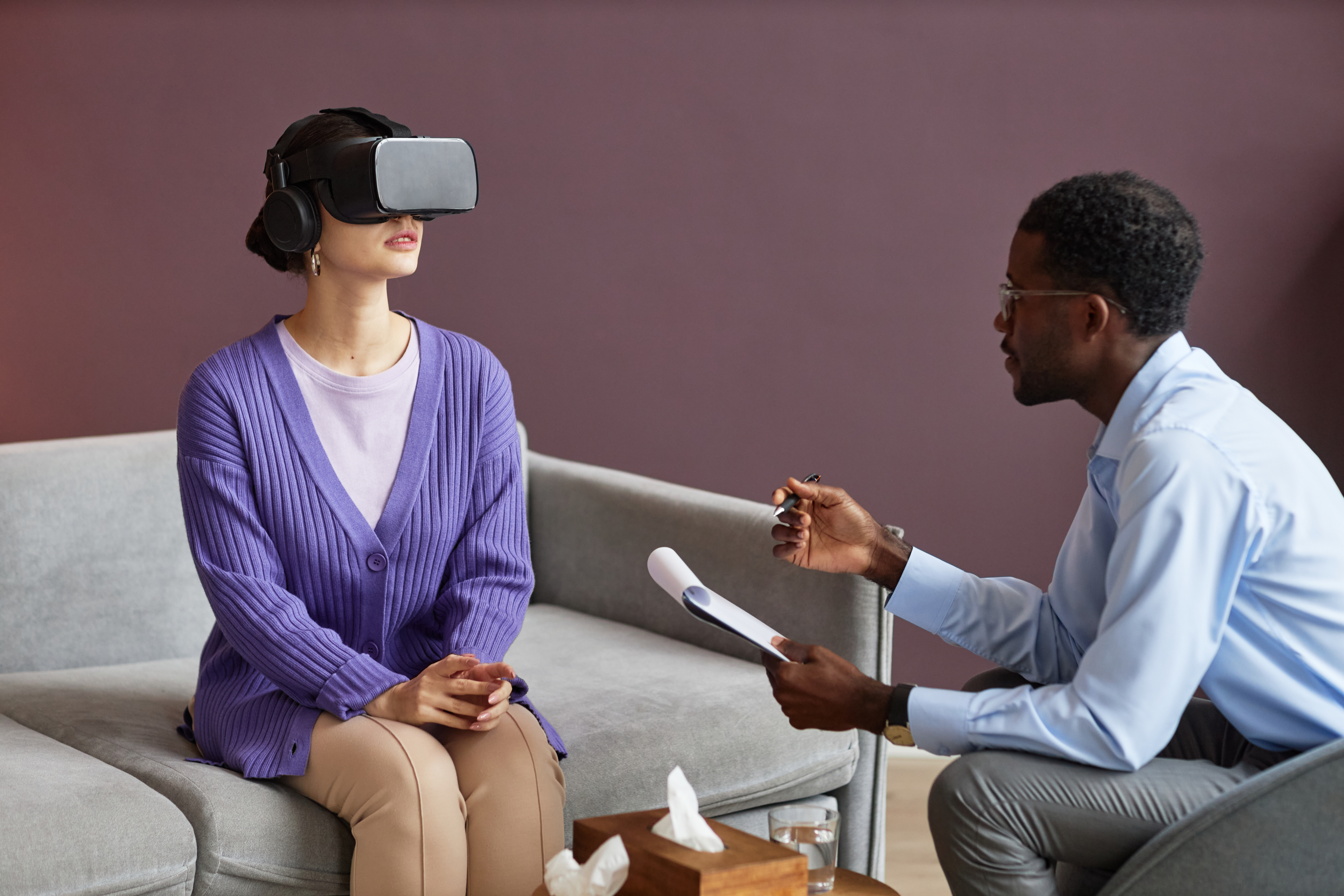
It simulates real-world situations securely and responsibly. People are placed inside computer-generated worlds accessed through a headset, with the guidance of a trained therapist. The therapist manages the experience as needed, while speaking with the patient throughout.
The key feature of VR therapy is immersion. The virtual environments are designed to feel realistic enough to evoke genuine emotional or behavioural responses, while remaining safe and contained. These environments are created specifically for therapeutic purposes, rather than entertainment.
A central part of VR therapy is the therapist’s role. The therapist selects the virtual world, monitors the person’s reactions during the session, and supports reflection. The technology is used to support therapeutic work, not to replace human care or clinical judgement.
VR therapy sessions are clearly structured and facilitated, with clear intentions based on each person’s needs. For example, someone who feels anxious in particular situations can practise facing them gradually within a virtual environment.
Before the session begins, the therapist explains what will happen and agrees on the goals for the exercise.
During the session, the therapist controls the virtual environment. Scenarios can be changed, repeated, paused, or stopped altogether if appropriate. This allows the therapist to respond to the patient’s emotional or behavioural reactions as they arise. It also helps the person engaging in VR therapy to feel in control and able to opt out at any point.
Example scenarios might include:
After the experience, time is set aside for discussion, helping to connect the experience within the virtual environment to real-world thoughts, emotions, and coping strategies. This reflective stage is an essential part of the therapeutic process.
VR therapy is used as part of exposure-based and skills-focused therapeutic approaches. It’s been used to replicate situations that may be difficult to access comfortably or consistently in everyday life.
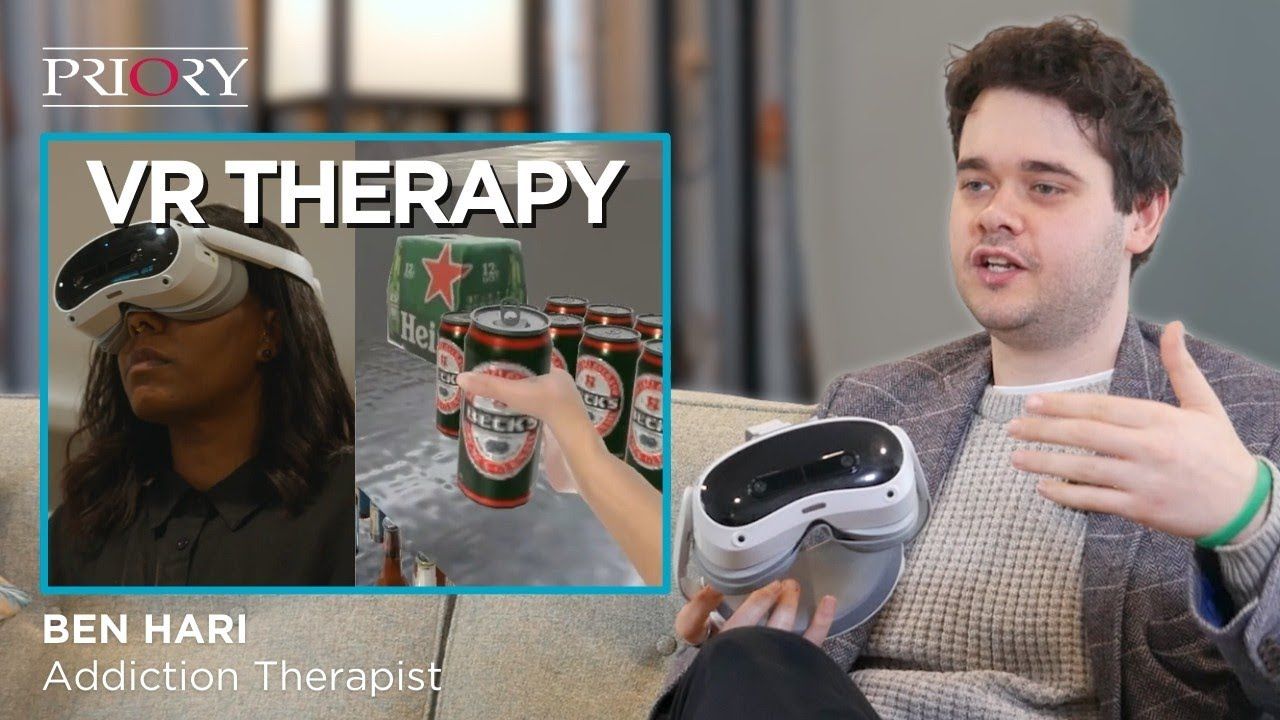
It makes it especially suited to treating addictions. Recovering addicts can expose themselves to common triggers they experienced before treatment, such as house parties, slot machines or alcohol aisles in supermarkets. VR therapy exposes patients to these triggers, but in a safe and controlled environment.
This kind of therapy has been studied in relation to a range of diagnosed conditions, including anxiety-related difficulties, phobias and post-traumatic stress disorder (PTSD), often within controlled clinical or research environments.
It might also be used to help place people in therapeutic environments like those in nature – which can support mindfulness activities for those with mood disorders or anxiety.
Beyond mental health, VR therapy has been studied in areas such as pain management, physical rehabilitation and neurological recovery, where immersive environments may help support distraction from pain, movement retraining or engagement with therapeutic exercises.
VR therapy may offer several potential advantages when used appropriately within clinical care. These include:
If VR therapy is included as part of a treatment programme, it will always be introduced carefully and with a transparent explanation. As part of responsible use, people will be given full context for why it is being used and how it fits into their wider care.
Ongoing reviews with the therapist will help to keep the approach appropriate and supportive. This allows people to communicate with specialists about how the treatment benefits them, and whether they wish to continue.
VR therapy does not replace other elements of treatment and is used to support comprehensive, tailored mental health treatment programmes and recovery work.
Within addiction treatment, VR therapy can be used to recreate realistic, everyday situations that may be linked to substance use. These environments can reflect common triggers, emotional states, or social contexts associated with relapse risk.
Using VR in this way allows people to explore their reactions and practise coping strategies as part of relapse-prevention work. Therapists can observe responses in real time and help bring awareness to emotions, provide grounding techniques, and help to avoid relapse.
VR therapy does not treat addiction on its own. Instead, it is used as a supportive tool that complements talking therapies, group work, and broader recovery planning.
Priory currently uses VR therapy within treatment programmes at Flourish, our revolutionary therapy-led addiction service in North London and Surrey. We also offer VR therapy within our mental health services at The Residence in Priory Hospital Roehampton, for guided exposure, relaxation or immersive mindfulness.
Priory uses VR therapy as part of structured treatment programmes. Sessions are clinically supervised and delivered by trained professionals within a wider treatment framework.
At Priory, VR therapy is used to support therapeutic goals such as understanding triggers, building coping strategies, and strengthening long-term self-care tools. It is integrated into individual treatment plans.