
What to expect from rehab
During rehab, we'll help you to overcome your addictive behaviours and take steps towards a lasting recovery.


Starting addiction rehab can feel daunting, particularly if you’re unsure what the process involves. It’s normal to feel anxious about taking this step. Rehab is designed to provide a safe, structured and supportive environment where you can stabilise physically, understand your addiction, and begin building healthier coping strategies.
At Priory, you’ll be supported by experienced specialists who deliver compassionate, evidence-based treatment tailored to your needs and circumstances.
Rehab is a structured addiction treatment programme that supports people to reduce or stop addictive behaviours and address the underlying causes.
Rehab can support people struggling with:
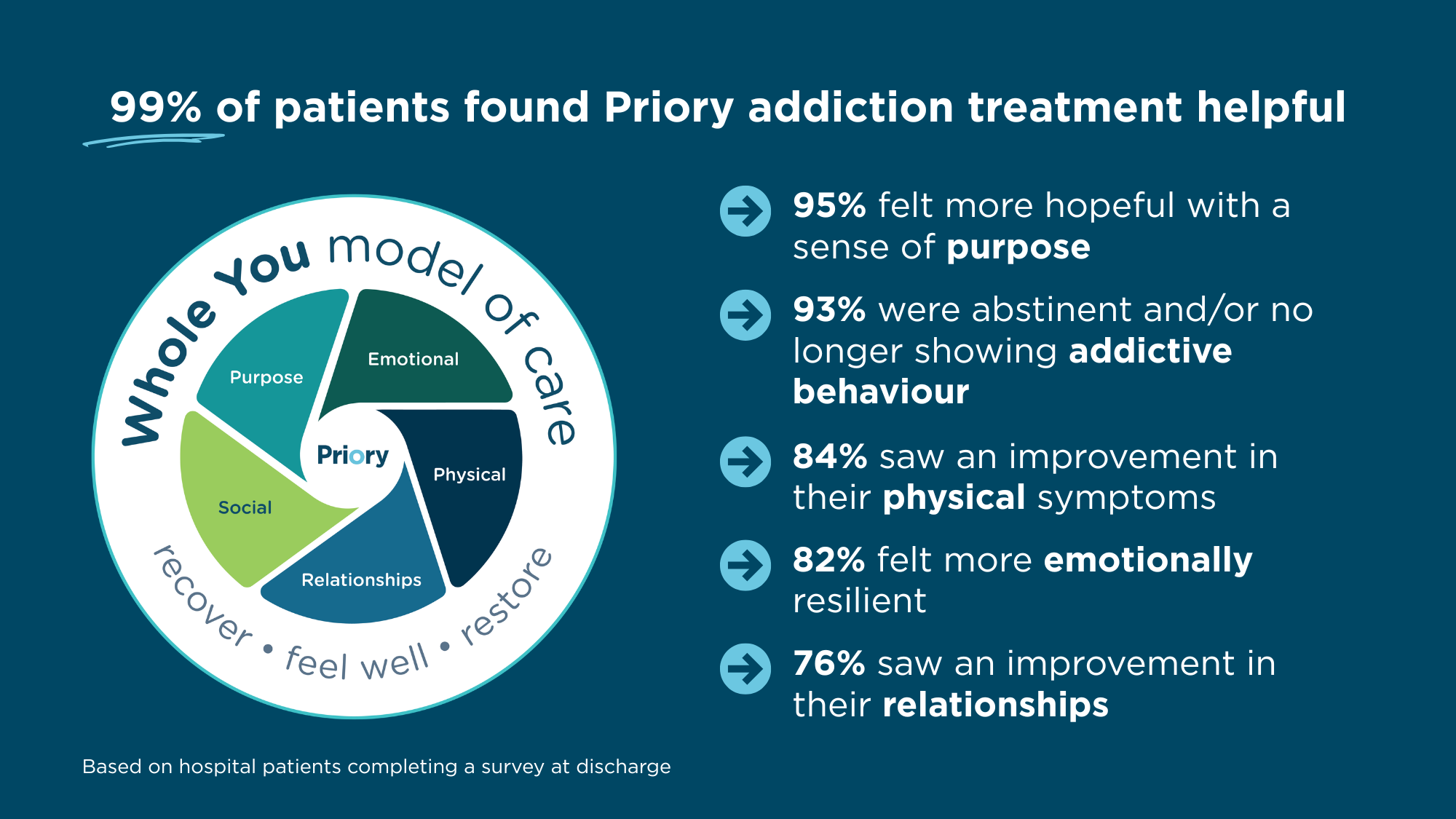
Treatment takes a whole-person approach, considering your physical health, emotional wellbeing, relationships and longer-term goals.
The first step is to speak to a professional. You can contact your GP or get in touch with Priory directly.
Priory offers a free, confidential, no-obligation addiction assessment, either over the phone or in person. During this assessment, a specialist will:
The assessment is supportive and non-judgemental. Its purpose is to help you feel informed, reassured and clear about your options.
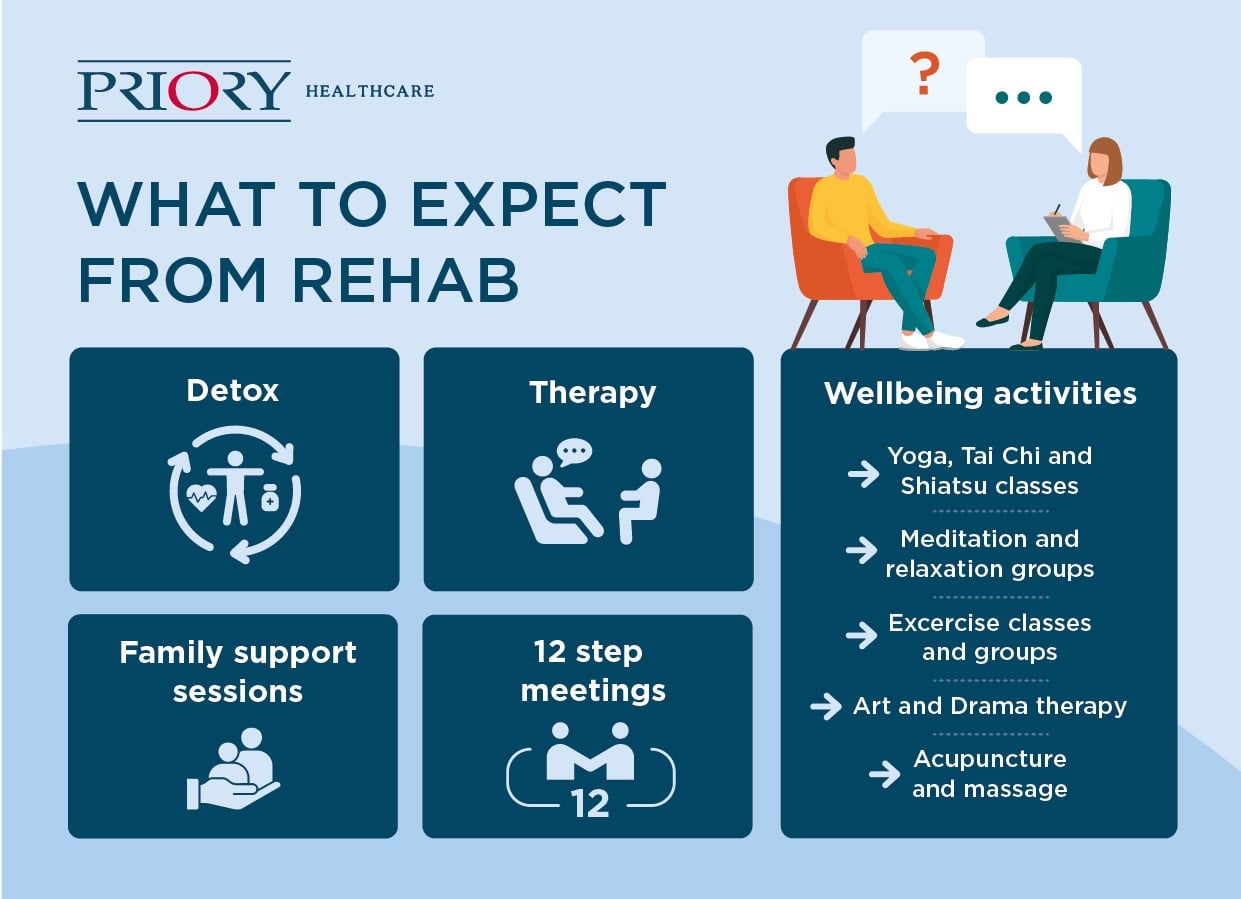
Your treatment plan will be personalised. It may include detox, therapy, wellbeing support and, where appropriate, family involvement.
If you’re physically dependent on alcohol or certain drugs, a medically assisted detox may be recommended at the start of treatment.
Detox will:
Some people complete detox as a standalone intervention. Others continue into further structured treatment once physically stable, such as inpatient rehab, day care, outpatient therapy or online support.
Your team will help you decide what is most appropriate based on your needs and personal circumstances.
For many people, therapy forms the core of rehab. It helps you understand the emotional, psychological and behavioural factors linked to your addiction.
Therapeutic approaches may include:
Most inpatient programmes include structured group therapy alongside individual sessions where clinically appropriate.
Addiction can affect family members and loved ones. Where appropriate, treatment may include family support sessions to help:
Family involvement is always discussed with you first and tailored to what feels supportive and appropriate.
Many Priory addiction programmes draw on elements of the 12-step model. You may also have the option to attend fellowship meetings such as Alcoholics Anonymous or Narcotics Anonymous, either on-site or within the community, depending on your preferences.
Alongside therapy, inpatient and residential programmes include wellbeing activities designed to support emotional and physical health. These may include:
These activities can help regulate stress, build routine and encourage healthier habits.
Rehab provides structure and routine, which many people find stabilising. While each programme differs slightly, a typical day may include:
This balance of structure and flexibility supports engagement in treatment without feeling overwhelming.
The length of rehab varies depending on your needs and the level of support required.
Many people benefit from a 28-day inpatient programme, often including a 7 to 10-day detox followed by intensive therapy. However, treatment length is flexible and may include:
Your initial assessment will help determine the most suitable approach and duration for you.
Treatment does not end when a programme finishes. Many Priory programmes include up to 12 months of free aftercare, which may involve:
Some people also continue with outpatient therapy or digital support to maintain progress. Aftercare is designed to help you feel supported as you transition back into everyday life.
Addiction is treatable, and seeking support is a positive step forward. Priory offers fast access to specialist addiction treatment across the UK.
You can arrange a free, confidential assessment to explore your treatment options and discuss what support might be right for you.