



Practising gratitude can help to ground you in times of stress, exhaustion or overwhelm. While it’s often recommended for mental health and everyday self-care, it’s sometimes misunderstood.
This page explains what gratitude is, how it affects the brain, and simple ways to practise it in everyday life.
A brief definition of gratitude
Gratitude is the feeling or state of being thankful and appreciative of the good things that exist in your life, including small or everyday moments. It involves an awareness of what’s present rather than what’s lacking, which can help reduce the impact of difficult thoughts and emotions, and support a calmer, more grounded state of mind.
Understanding gratitude
Gratitude shapes how we notice and respond to our experiences. It influences attention, memory and the way we interpret events. This means it can help you recognise moments of joy, support or personal achievement, even in times of difficulty.
It guides behaviour and can have a lasting effect. People practising gratitude are more likely to acknowledge others’ contributions, nurture relationships, and notice opportunities for kindness or cooperation. By focusing on benefits or support rather than threats or losses, gratitude can help people consistently reframe negative experiences.
Rather than being a fixed personality trait, gratitude is a mental process that can be practised at any time.
Common misconceptions about gratitude
Gratitude:
- Isn’t about ignoring problems, pretending everything is fine, or forcing yourself to feel positive all the time
- Doesn’t completely erase feelings of stress, sadness or frustration
- Isn’t a replacement for other mental health interventions
It’s OK if gratitude feels unnatural at times. Many people find it easier some days than others, which is a normal part of the human experience. The practice is flexible and personal, allowing space for your full spectrum of emotions.
You don’t need to practise gratitude perfectly frequently, or in a particular way. Even brief or occasional moments of appreciation can help you feel more anchored in everyday life.
How gratitude changes your brain
Gratitude influences how the brain processes reward, stress and emotions. Practising gratitude can strengthen neuroplasticity, which is essentially your brain’s ability to form helpful new habits and ways of thinking.
- Reward and motivation pathways: Gratitude activates reward systems in the brain, supporting more positive and productive thought patterns
- Emotional regulation: Practising gratitude can help people notice and manage their emotions more calmly and consciously
- Stress and threat response: Focusing on gratitude may reduce perceived stress and lessen the brain’s fight-or-flight response
- Negativity bias: Gratitude can help counter the brain’s tendency to focus on negative experiences by drawing attention to positive ones.
How to practise gratitude
Here are a few practical ways to bring gratitude into daily or weekly rountine.
Simple ways to practise gratitude
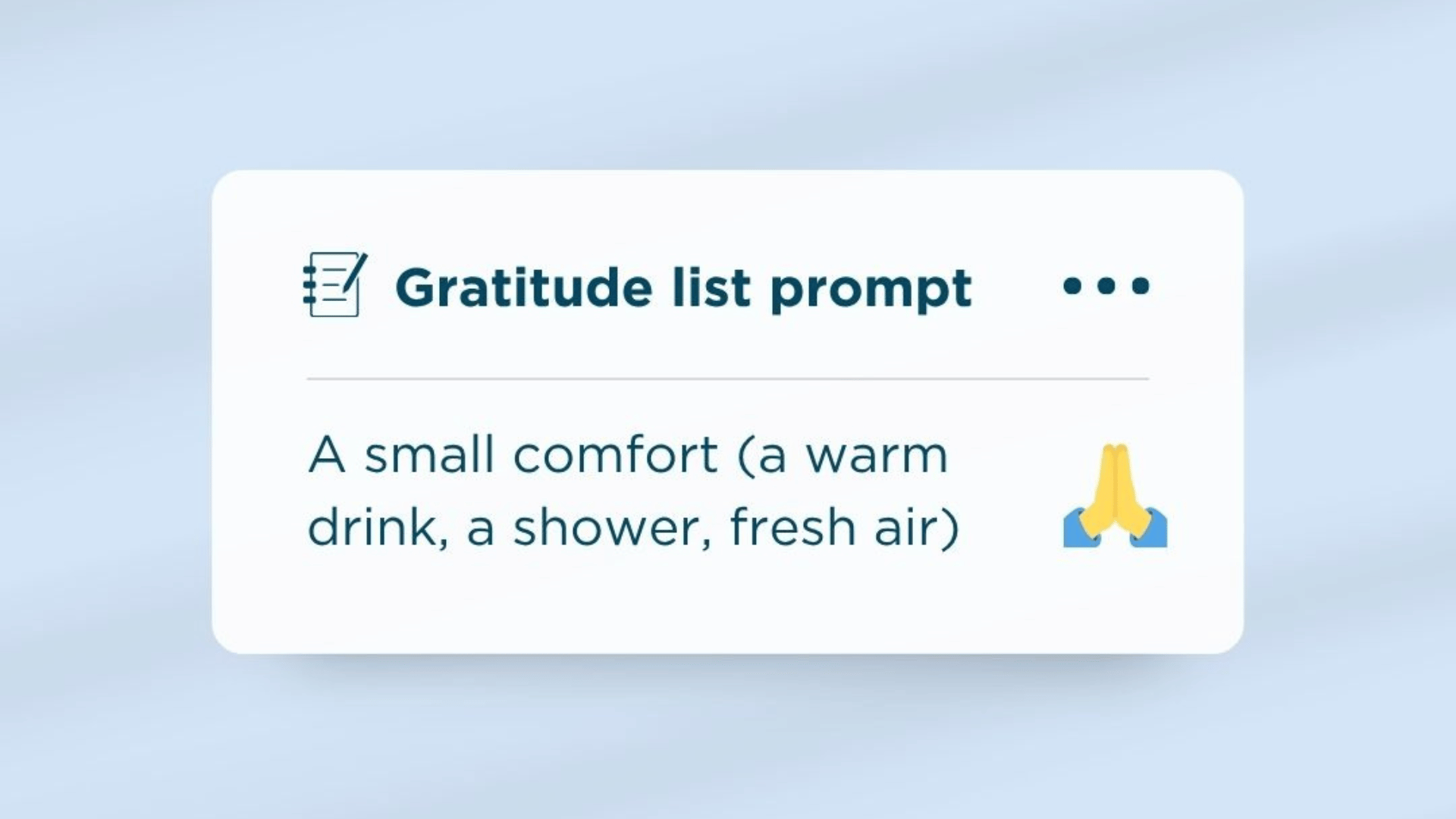
- Notice small positives: Pause to acknowledge something supportive, comforting or helpful in your day
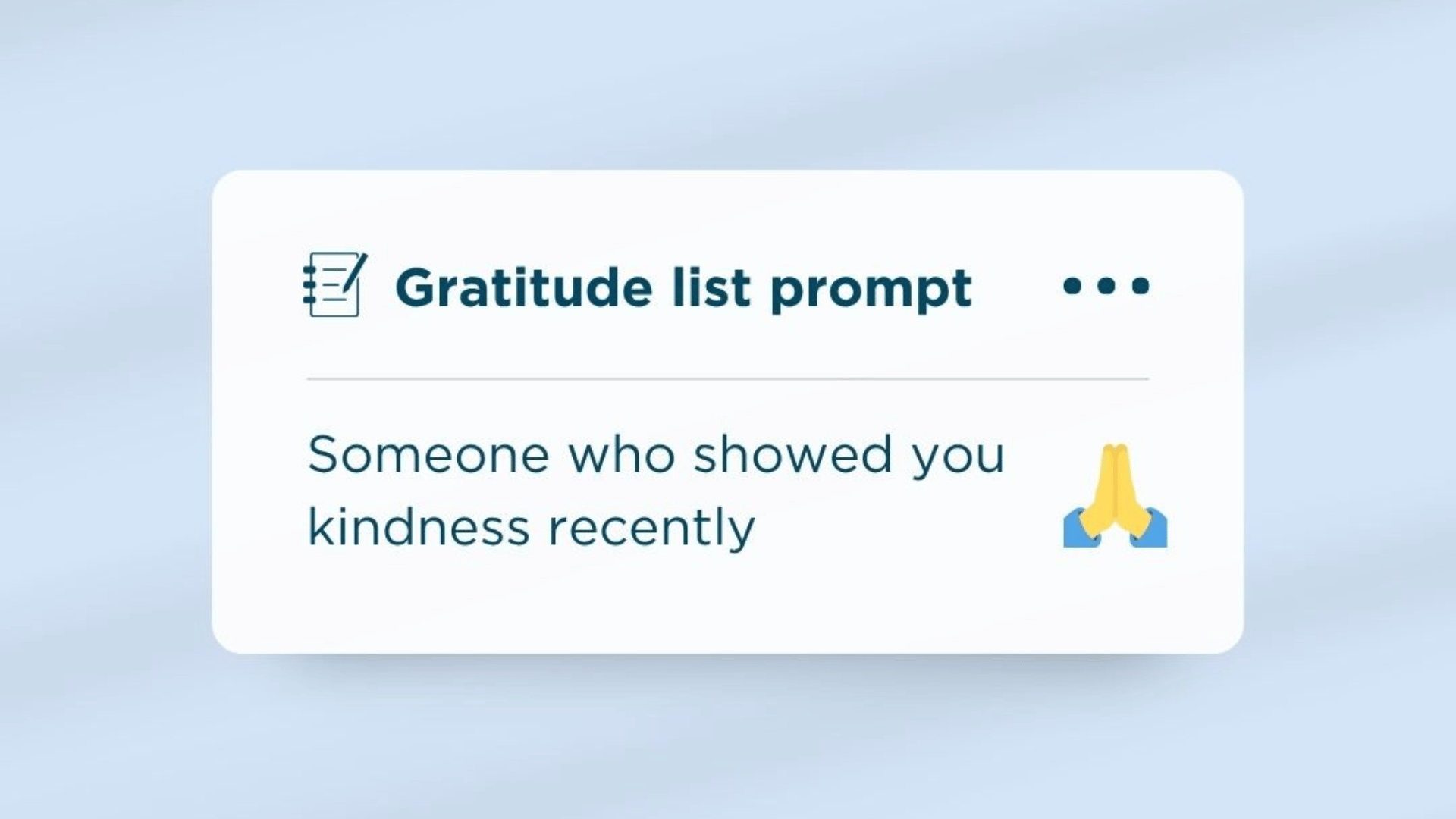
- Recognise others’ contributions: Take a moment to notice how it feels when someone’s actions or words positively impact you
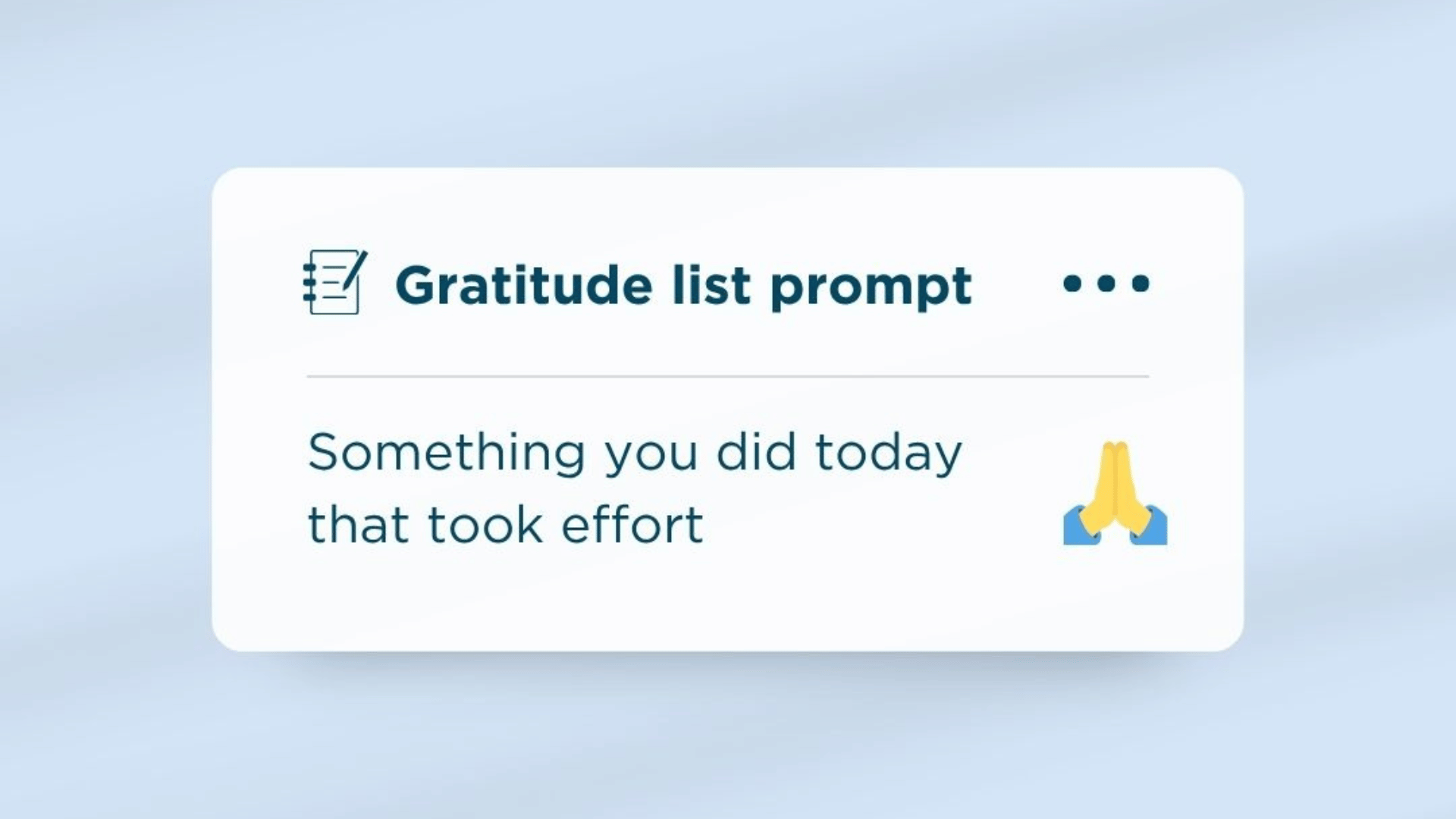
- Appreciate your personal effort: Celebrate yourself when you show kindness to someone, meet your own needs through self-care, or achieve something, however small
Practising gratitude during difficult times
Gratitude can feel harder to access when you’re stressed or overwhelmed, and that’s normal. There’s no need to force positivity or override how you feel. Some days, simply acknowledging that gratitude feels out of reach can be supportive in itself.
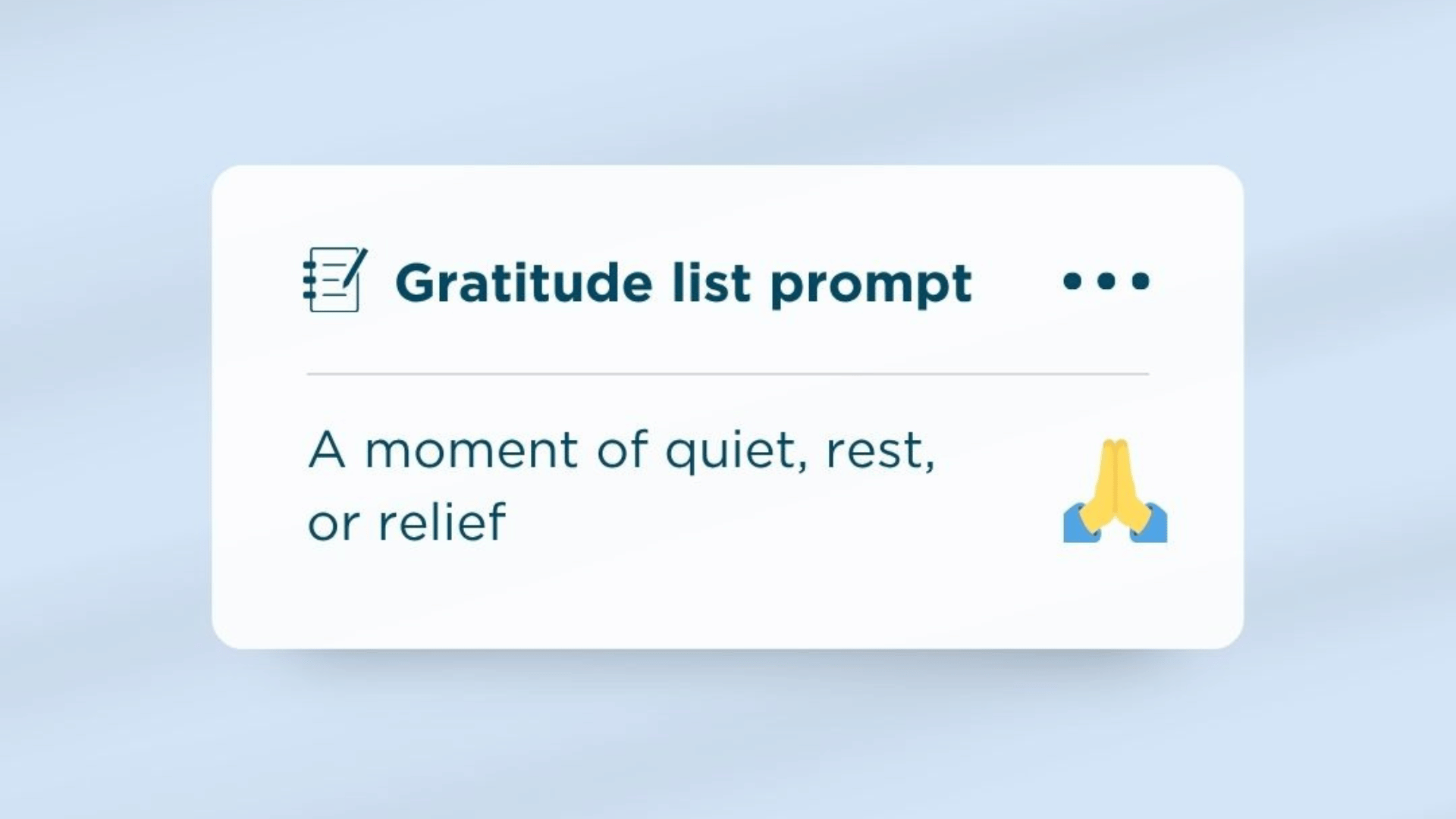
At other times, gently noticing small, ordinary moments may offer a little relief. This is optional, not an expectation. Validating your experience matters more than doing anything that adds pressure.
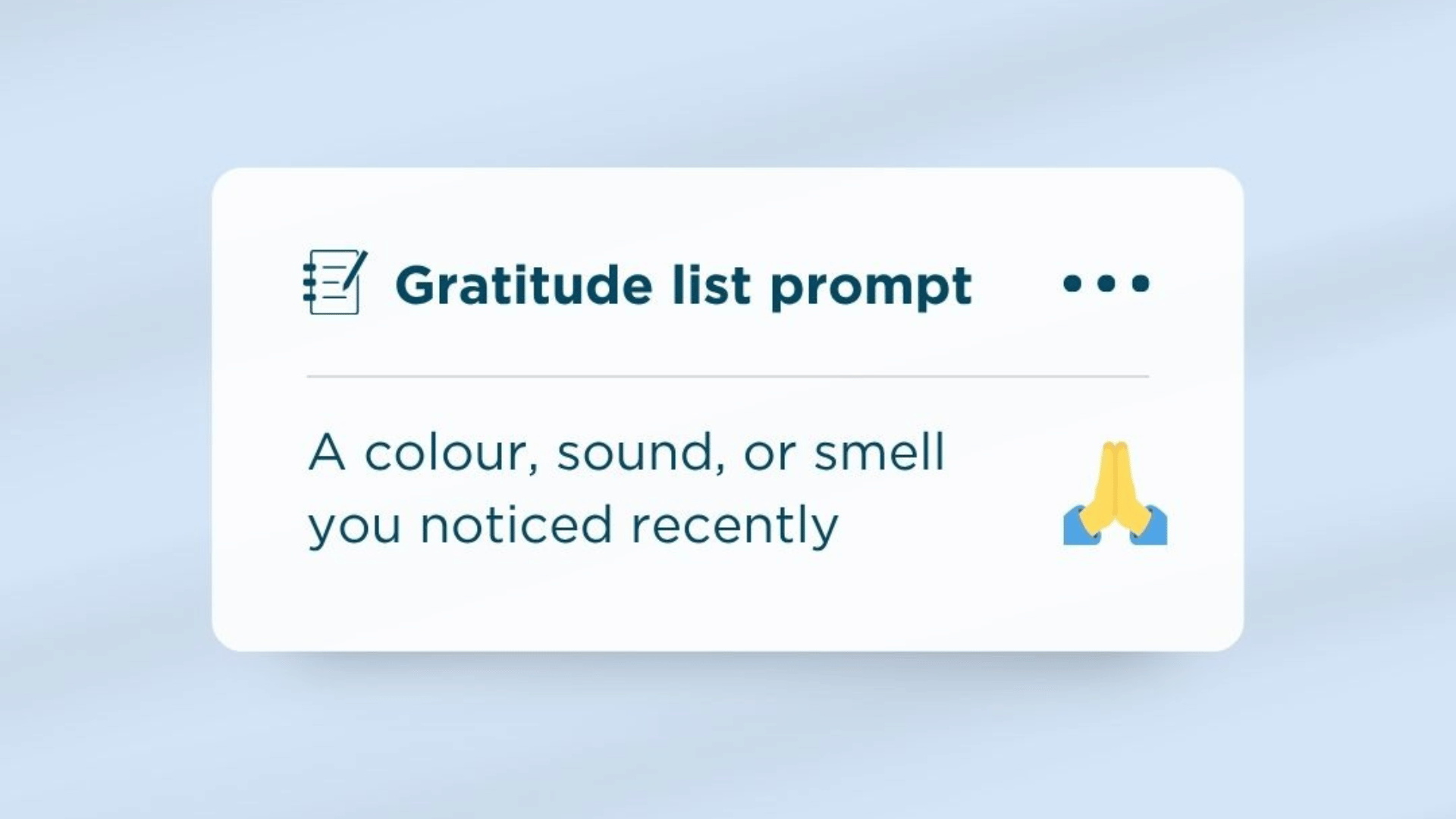
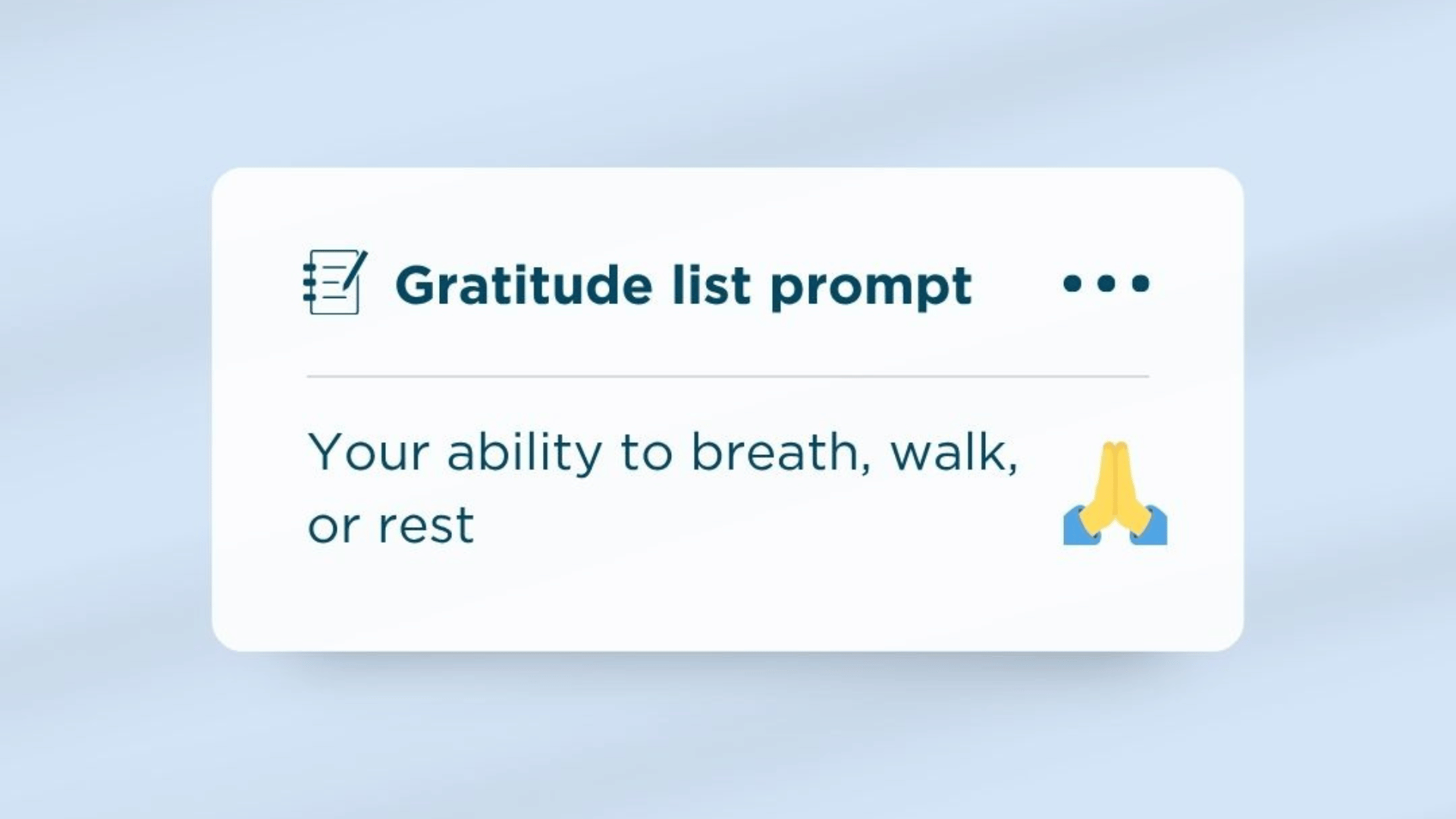
Examples of gratitude
1 of 3
A guided meditation for gratitude
Gratitude and meditation
Gratitude and meditation naturally complement each other, helping to bring awareness and focus to positive aspects of life.
Just a few minutes of regular meditation brings noticeable benefits.
How they work together
Meditation helps you notice unhelpful or repetitive thoughts and gently bring your focus back. Over time, this can make it easier to focus on what feels meaningful, rather than getting caught up in daily stress.
Mindful awareness supports staying present and noticing thoughts without trying to stop them. This can make it easier to recognise feelings of appreciation as they naturally arise.
Combining gratitude with meditation can support emotional regulation, helping you experience emotions without becoming overwhelmed and reducing internal tension over time.
Simple ways to combine gratitude and meditation
A short guided reflection invites you to spend a few minutes focusing on something you appreciated today. As you notice the details, gently guide your attention back whenever it drifts, without judgement.
Mindful breathing with gratitude involves bringing to mind a person or thing that supports you as you breathe. With each inhale, imagine taking in positive feelings, and with each exhale, letting go of unhelpful thoughts or self-judgement.
A body scan of appreciation encourages you to notice sensations of comfort or ease in the body. Moving slowly from head to toe, acknowledge each sensation as it arises, and gently observe areas of tension without trying to change them.
Gratitude phrases and affirmations
Intentionally worded phrases can help some people get a better sense of what they’re grateful for, especially when thoughts feel busy or overwhelming.
We've suggested a few different types of affirmations below. You can personalise them to fit what feels most true or helpful for you.
Gentle everyday gratitude
Around daily life:
- “I notice small moments of calm today”
- “I appreciate all that I have”
- “I’m aware of what brings me ease”
Gratitude during difficult times
For mixed emotions:
- “Even during stressful periods, I notice what feels supportive”
- “I acknowledge both challenges and small comforts today”
- “I am grateful for what brings me stability”
Gratitude towards others
To support recognition and connection:
- “I appreciate the help I received from someone today”
- “I notice the care and effort of those around me”
- “I am thankful for a moment of kindness shared”
Gratitude towards yourself
To help you find self-acknowledgement:
- “I notice my effort and persistence today”
- “I am grateful for the ways I care for myself”
- “I appreciate the rest and recovery I allow myself”
These phrases can be used as gentle prompts, rather than instructions. They can be spoken, written, or silently reflected upon; whatever feels helpful for the moment.