
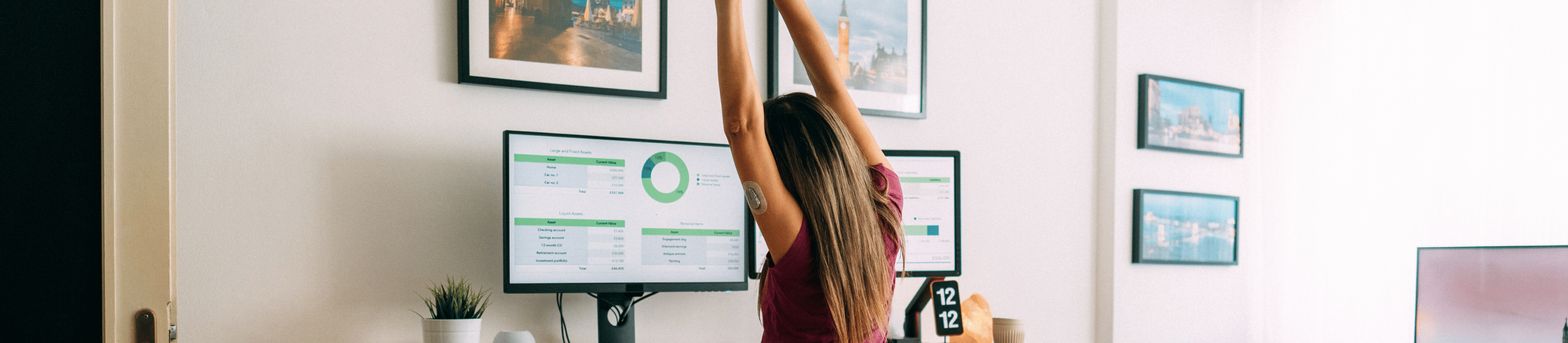


Spending long hours at a desk can take a toll on your stress levels, whether you’re working from home or in an office.
Here, we share simple, desk-friendly ways to relieve stress, and help you feel calmer and more in control as the day goes on.
We also outline what to do if your stress levels start to feel overwhelming, with guidance on possible next steps and sources of support.
Quick ways to relieve stress at your desk
These quick, desk-ready techniques are designed for moments when your stress rises and you need fast relief without the need for special equipment:
- Pause and reset – stop what you’re doing for a few seconds and let your body become still. Even a very brief pause can interrupt the stress response and help you regain focus
- Release hidden tension – make yourself aware of areas that often hold stress, such as your jaw, shoulders, hands or feet. Gently let them soften and rest
- Shift your visual focus – look away from your screen and focus on something in the room or in the distance for 20 to 30 seconds. This can reduce mental overload and eye strain
- Reduce sensory overload – lower your screen brightness, mute non-essential notifications or reduce background noise if possible. Small sensory adjustments like these can quickly make your environment feel more manageable
- Use temperature as a reset – take a sip of cold water or hold a warm drink for a moment. Changes in temperature can help bring your body out of stress mode
- Create a mental break between tasks – before moving onto your next task, take a few seconds to mentally close off the previous one, helping your brain to switch focus. Try ticking it off a list or closing the document or tab you’re working on
- Reset your posture – sit back in your chair, place both feet on the floor, and allow your spine to lengthen. A small posture shift can ease physical strain and support calmer focus
Desk-friendly breathing and mindfulness activities
Breathing and mindfulness activities can also help to calm your body, slow things down, and steady your mind when stress starts to rise during the working day.
Box breathing
This is a structured breathing technique that can help settle your breathing rhythm when you feel under pressure.
Follow along to box breathe with Dr McLaughlin
- Sit comfortably and let your shoulders drop
- Breathe in through your nose for a count of 4
- Hold for a count of 4
- Breathe out slowly for a count of 4
- Hold for a count of 4
- Repeat for 3 to 5 cycles
Long exhale breathing
This technique focuses on making your out-breath slightly longer than your in-breath, which can support relaxation and a sense of safety.

- Keep your lips closed and breathe in through your nose
- Take a comfortable breath in for a count of 3
- Breathe out slowly for a count of 4 or 5, as if you’re gently steaming up a mirror
- Repeat for 6 to 10 breaths, keeping everything soft and unforced
Top-up breathing
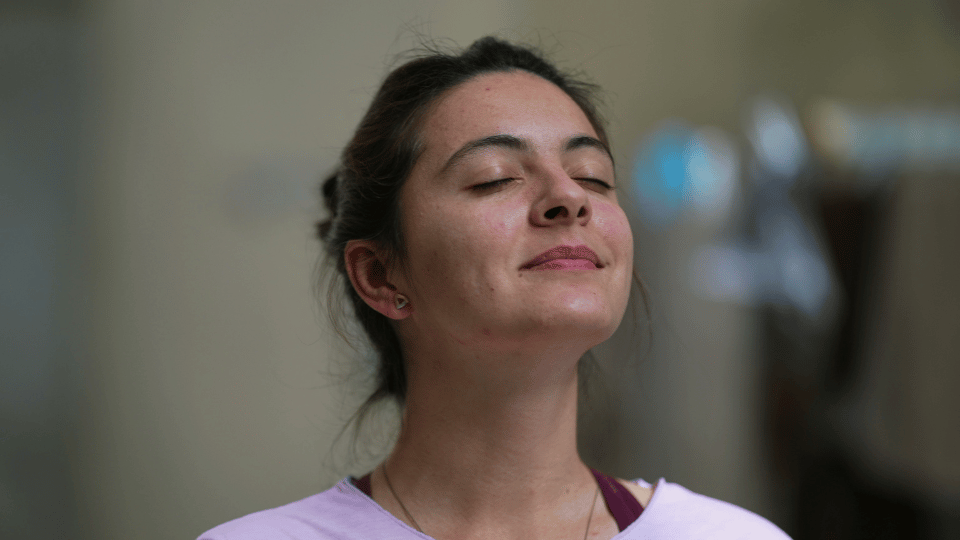
- Take a slow, deep breath in through the nose
- When you get to the top of the breath, take a sharp inhale to top-up
- Breathe out very slowly through the mouth until it feels like your lungs are empty
- Repeat for a minute or 2
Mini body scan
This is a short, desk-friendly version of a body scan, helping you notice and release tension without doing a full meditation.
Follow along with this body scan meditation
- Sit back in your chair and place both feet on the floor
- Briefly notice your forehead and eyes, then allow them to soften, without judgement
- Check your jaw and tongue, and let them rest, without judgement
- Notice your shoulders and hands, and release any tension, without judgement
- Finish by noticing your feet on the floor, then return to your task
Simple stretches to ease physical tension
Stress doesn’t just affect the mind. Long periods of sitting can also lead to physical tension building up in your neck, shoulders and lower back.
These gentle stretches can be done throughout the day, while you’re sitting or standing at your desk. Remember to move slowly and stop if anything feels uncomfortable.
- Neck side stretch – sit or stand tall and let your shoulders relax. Gently tilt your head towards one shoulder, keeping your chin facing forwards. Hold for a few seconds, then return to centre and repeat on the other side
- Shoulder rolls – lift your shoulders slightly towards your ears, then roll them back and down in a slow, circular motion. Repeat a few times, then change direction
- Upper back stretch – sit upright and clasp your hands together in front of you. Gently push your hands forwards while rounding your upper back slightly, as if you’re creating space between your shoulder blades. Hold for a few seconds, then relax
- Seated spinal twist – sit with both feet flat on the floor. Place one hand on the opposite knee and gently twist your upper body in that direction, keeping your hips facing forwards. Hold briefly, then return to centre and repeat on the other side
- Standing lower back release – if you’re able to stand, place your hands on your hips and gently lean back a small amount, looking straight ahead rather than up. Hold for a few seconds, then return to standing tall
Small daily habits to reduce stress throughout the day
Stress often builds when the day feels rushed or unstructured.
Small, realistic habits, like those below, can help create a steadier rhythm, supporting calm and focus and helping prevent stress from building up in the first place.
- Plan your day in manageable blocks – breaking work into clear, realistic chunks can make tasks feel less overwhelming. Try grouping similar tasks together and leaving small gaps between them where possible
- Protect short breaks – regular breaks are easier to take when they’re treated as part of the working day rather than an interruption. Even brief pauses away from your screen can help prevent mental fatigue building up
- Support your body with regular fuel – eating and drinking regularly helps maintain energy and concentration. Keeping snacks and water nearby can reduce physical stress and dips in focus
- Adjust your setup as the day goes on – your needs can change throughout the day. Small adjustments such as moving your chair, changing lighting, or switching between sitting and standing can improve comfort without major disruption
- Change your environment when you can – a short walk, fresh air, or a change of scenery can help reset your mood and attention. This doesn’t need to be long to be effective
- Create a clear end to the working day – having a consistent way to finish work, such as reviewing what you’ve done or preparing a short list for tomorrow, can help your mind switch off more easily
Longer-term strategies to support wellbeing at work
Alongside the quick techniques and daily habits already covered, there are broader routines and patterns you can introduce that help maintain calmer, more sustainable wellbeing over time.
Movement as a core part of your working day
Beyond short desk stretches, aim to build regular movement into your working day as a necessity rather than an add-on. Try a walk at lunchtime, walking meetings or activity breaks between longer tasks. Making movement part of your routine helps support mental clarity and more sustainable energy levels over time.
Create boundaries
Not everyone has full control over their working hours or workload, but it’s important to honour boundaries where you can. Having a clear sense of when your workday starts and ends can support a healthier separation between work and personal life. To support yourself, try switching off non-essential notifications outside core hours, protecting breaks, or avoiding checking work emails during personal time.
Prioritise quality rest
Good rest is central to long-term stress management. This doesn’t just mean taking breaks during your working day but also preserving time outside work for restful or enjoyable activities. Striking this balance over time helps reduce cumulative stress.
Build social connection
If social interaction is something you enjoy, staying connected with colleagues, from the home or the office, can help make day-to-day stress easier to manage. This might mean joining a team lunch, attending a social event, or sharing a brief check-in or chat, whether in-person or online.
Use expert-led tools as part of your routine
some people find it helpful to use structured, expert-led approaches to relaxation and stress relief outside of working hours. This short video introduces a guided technique that you can return to regularly in a quiet, private space, as part of a longer-term approach to managing stress.
When simple techniques aren’t enough
Sometimes, stress can continue even when you’re doing all the right things. This doesn’t mean you’ve failed; it often means you need a bit more support.
If your stress symptoms feel constant rather than situational, begin to affect your sleep or concentration, or leaves you feeling persistently tense or emotionally drained, it might be time to reach out for help.
Talking things through with someone you trust can be a helpful first step. You might also consider speaking to your GP or seeking professional support to better understand what’s driving your stress and what could help.
At Priory, we support people with work-related stress by looking at the whole picture, helping you find clear next steps and move forward in a way that feels manageable and reassuring.